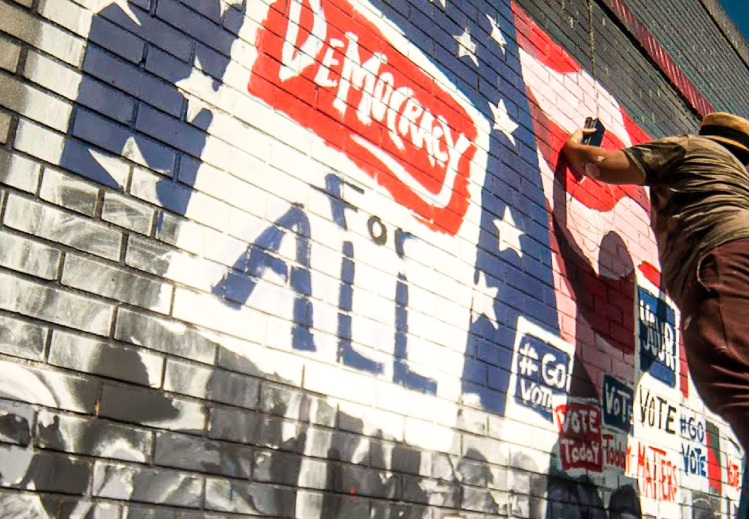
Going into this year’s elections, we have seen relentless attacks on voting rights, democracy, and free and fair elections. As November elections approach, Trump continues to ramp up his attacks on our democracy – blocking mail-in voting, demanding his allies gerrymander district maps, and reportedly plans to deploy ICE agents to polling places.
That’s exactly why LCV and our state affiliates helped defend free and fair elections across the country. People are rallying to pass policies to protect our democracy. Just as we fight every day to lower energy costs, protect our clean air, clean water, and public lands, we know that protecting democracy is the foundation for any real progress. When voting rights erode, so does our power to protect everything else.
From the shores of the Chesapeake Bay to the tundra of Alaska, advocates and lawmakers are pushing back. Here is what’s happening on the ground.
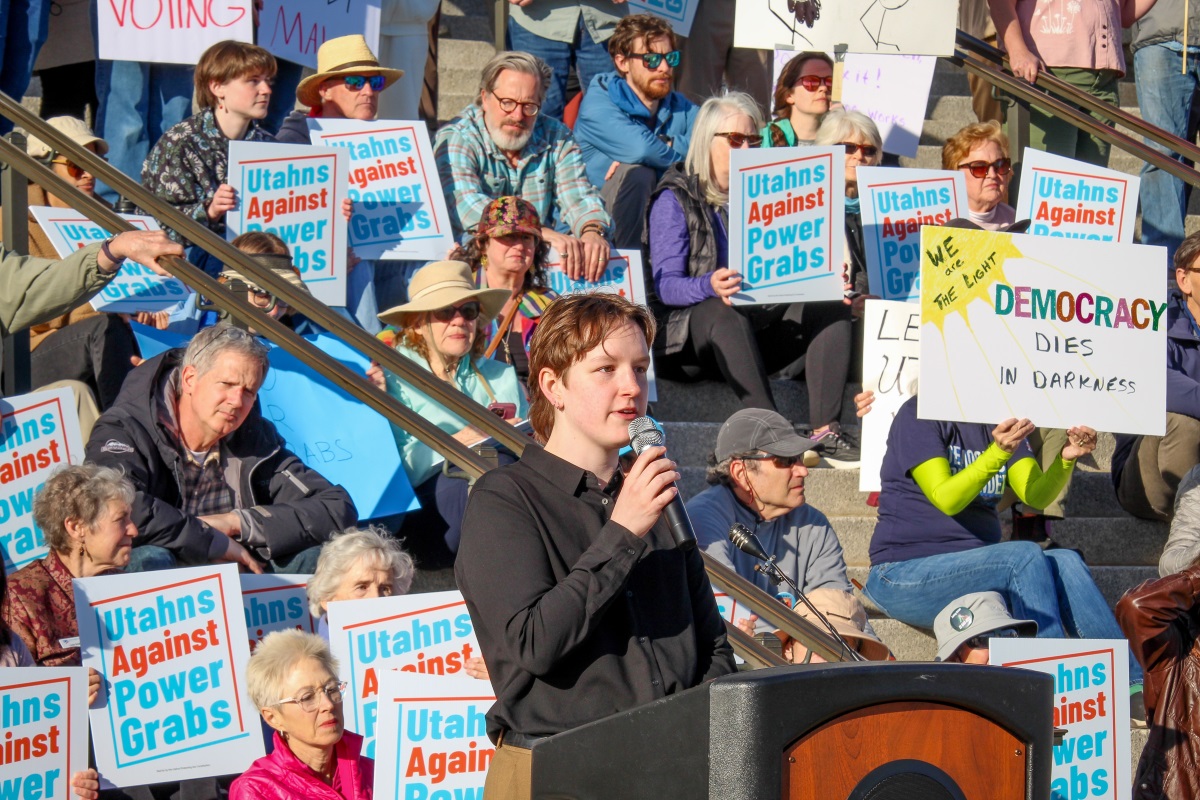 Stewardship Utah and the Let Utah Vote Coalition held a rally in March to urge the Governor to veto legislation eroding voting access, ballot initiatives, and judicial independence. Credit: Let Utah Vote Coalition and Bella Brewer.
In a year of relentless federal backsliding, Maryland gave us a blueprint for progress. In April 2026, Governor Wes Moore signed Senate Bill 255, a cornerstone of the multi-bill Maryland Voting Rights Act (MDVRA), into law — making Maryland the 10th state in the country to enact a state-level Voting Rights Act. The contrast to the federal level could not be more stark; the law was signed just 24 hours before the U.S. Supreme Court issued a decision gutting a key provision of the federal Voting Rights Act of 1965.
SB 255 bans cities and counties in Maryland from using any election system, district map, or other policy that results in racial vote dilution — the canceling out or minimizing of the voting power of historically disenfranchised communities, denying them an equal opportunity to elect their preferred candidates. While federal protections have become altogether impossible to enforce in court, Maryland’s new law streamlines enforcement by removing unnecessary barriers and spelling out clear, enforceable standards.
An enormous coalition of state organizations helped move this bill forward including Maryland LCV, ACLU of Maryland, Campaign Legal Center, Common Cause Maryland, League of Women Voters of Maryland, Legal Defense Fund, and NAACP Maryland.
Virginians have the chance to bring full voting rights to all. On the ballot Virginians can choose to automatically restore voting rights to formerly incarcerated Virginians upon their release from prison, without requiring them to petition the governor individually.
Virginia’s current system dates back to the Constitution of 1901–1902, when a lifetime ban on voting for people with felony convictions was enacted deliberately to disenfranchise Black Virginians. As recently as 2016, at least 7 percent of Virginia’s adult citizens — including 22% of African-American voters — were disenfranchised under this lifetime ban. Governor Abigail Spanberger, who signed the measure to advance the amendment to a ballot referendum, stated: “When Virginians have paid their debt to society, they deserve to regain their right to vote.”
Virginia LCV has been a leader over the last few years for Restoration of Rights for formerly incarcerated people on the ballot, and this year their support paid off in getting past another hurdle. VALCV is already fighting for the measure that will be on the ballot in November, with hundreds of emails, phone banks, and a coalition wide campaign that has brought us to this point and set the state up for success in November. Virginia is the only state that permanently and automatically bans anyone with a felony conviction from voting and requires them to individually petition the governor to get their voting rights restored. This law is a remnant of Jim Crow, aimed at diminishing the rights and powers of Black Virginians.
In August 2025, a state district court ruled that SB 200, a bill to implement a gerrymandered redistricting process, was unconstitutional. The court ruled that the legislature had illegally overridden the will of Utah voters and the state must restore Proposition 4 in full, ordering the drawing of new congressional maps. The ruling was made possible by a unanimous Utah Supreme Court decision in July 2024 affirming that ballot initiatives reforming government are constitutionally protected and cannot simply be repealed by simple legislative majority.
The court’s new map creates a Salt Lake City congressional seat where the local community finally has an opportunity to have their voice heard and counted.
Utah Republicans, including party leadership and Senator Mike Lee, launched an initiative to repeal Proposition 4 and put it back on the 2026 ballot. That repeal effort ultimately failed to gather enough valid signatures thanks in large part to a concerted effort from local organizations to push back.
Stewardship Utah worked tirelessly with partners across the state to get 10,000 Utahns to withdraw their signatures for repeal. Their statewide communications campaign helped inform and turn the tide of public opinion for thousands of residents.
Alaska came close to a landmark election reform this session. SB 64 would have:
But Governor Mike Dunleavy vetoed the bill in April, citing concerns about the timeline for implementing a ballot tracking and curing system before the November general election, despite an implementation date of January 2027. The legislature narrowly missed the 40 votes needed to override, having passed the bill with a combined total of 39–20.The bill reflects years of negotiation and bipartisan compromise shepherded by the Alaska Center. Alongside local partners, they have negotiated directly with the governor’s team rallying support across the state and fighting off terrible amendments. While the bill did not ultimately pass, it made it abundantly clear, Alaskans are on the side of democracy and are willing to hold their leaders accountable.
Indiana lawmakers moved to slash early voting from 28 days to just 16 days, slipping the change into House Bill 1359 — a bill originally focused on ballot scanning procedures — without any public testimony.
The amendment would have eliminated the first two weeks of early voting, affecting hundreds of thousands of Hoosiers. Data showed that over 300,000 early voters — more than 22 percent of all early voters — cast their ballots during the two weeks that would have been cut in the 2024 election. Advocates and Democratic lawmakers warned it would mean longer lines, greater burden on working-class families, and further suppression of an already discouraged electorate.
Together with voting rights organizations across the state, Indiana Conservation Voters urged the Senate to stop the bill. They organized hundreds of calls, rallies, and worked with the press to help ensure the public rallied to protect their voting rights. With bipartisan opposition, the Senate never called the amended bill for a final vote before the February 24 crossover deadline, and it died without passage. Indiana’s 28-day early voting window will continue this November and beyond.
On June 17th, Georgia Republican Speaker Jon Burns sent a letter to Governor Kemp stating that the state House would not take up congressional or legislative redistricting this year, leaving maps for the critical 2028 election cycle unchanged.
This stunning turn around comes after enormous public outcry, calling out the anti-democratic attempt to undermine the public’s vote. Our state affiliate Georgia Conservation Voters rallied supporters to defend fair maps that give the state better representation, allowing more voices to be heard.
Conservation Voters of South Carolina (CVSC) played a crucial role in a coalition effort to prevent unfair redistricting, demonstrating their commitment to protecting voting rights and democracy. By connecting Republican constituents with key Republican senators, CVSC leveraged its bipartisan reputation, which proved essential in giving the effort a critical advantage. This strategic approach allowed them to effectively combat gerrymandering, ensuring that the voices of all voters could be heard and valued.
Idaho saw a quieter legislative session on voting rights this year, due in large part to the advocacy of Conservation Voters of Idaho (CVI) and its partners. Following last session’s successful pushback against restrictive election proposals, lawmakers appeared reluctant to advance controversial voting bills. In addition to monitoring election legislation, CVI worked closely with county clerks, election officials, and other stakeholders to identify opportunities to strengthen election administration. Those efforts helped support passage of an innovative new law allowing prospective jurors to volunteer as poll workers in lieu of jury service, helping rural counties address poll worker shortages while strengthening voter access and election administration.
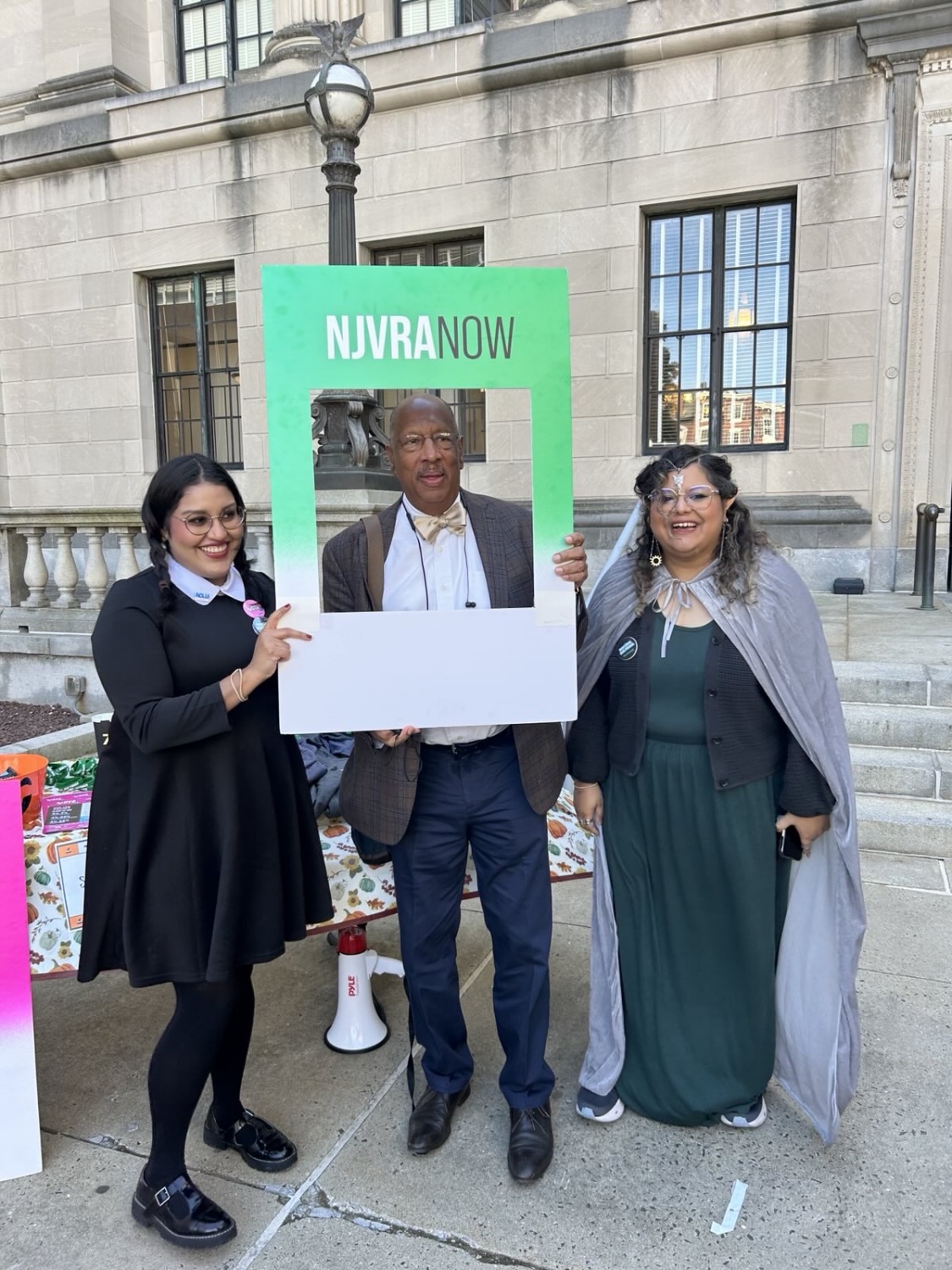 New Jersey LCV played a key role in advancing the New Jersey Voter Empowerment Act.
As November approaches, LCV and our state affiliates will be fighting to protect voting rights across the country. Ahead of elections there is still one more vital opportunity to watch:
New Jersey LCV played a leading role in the coalition advocating for the New Jersey Voter Empowerment Act (NJVEA), which made significant progress this session by passing the General Assembly and advancing through key Senate committees. After years of advocacy and lobbying across multiple legislative cycles, the coalition successfully built support among lawmakers and elevated the bill as a priority within the governor’s agenda. As the legislation moves toward the Governor’s desk, New Jersey LCV continues to mobilize advocates, engage decision-makers, and build momentum for what would be one of the strongest state-level voting rights protections in the country, helping safeguard access to the ballot and strengthen democracy in the face of ongoing federal attacks on voting rights.
©2026 League of Conservation Voters