December 12, 2025
U.S. House of Representatives
Washington, DC 20515
Re: Oppose H.R. 4776 the SPEED Act, H.R. 1366 the Mining Regulatory Clarity Act, and other anti-environmental legislation (H.R. 3616, H.R. 3632, H.R. 845)
Dear Representative:
The League of Conservation Voters (LCV) believes that everyone has a right to clean air, clean water, public lands, and a safe climate protected by a just and equitable democracy. Each year, LCV publishes the National Environmental Scorecard, which details the voting records of members of Congress on environmental legislation. The Scorecard is distributed to LCV members, concerned voters nationwide, and the media.
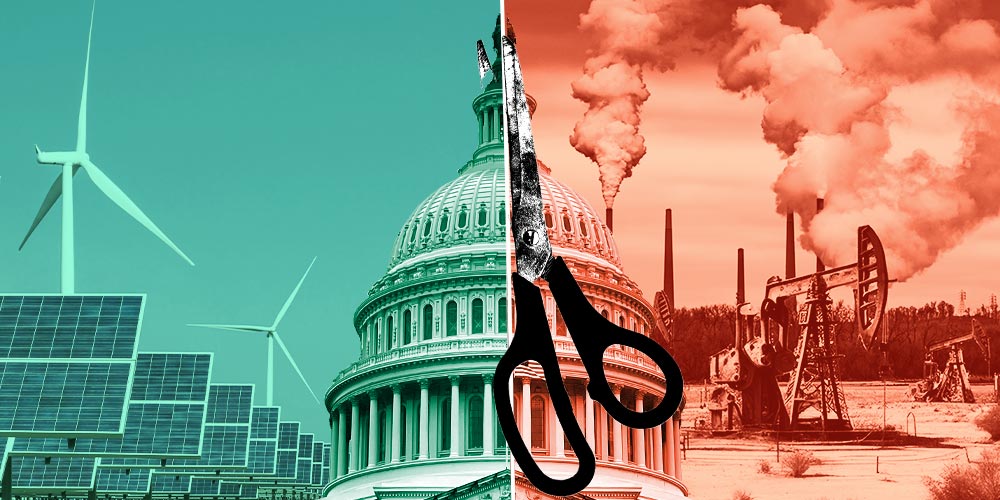
We urge you to OPPOSE the following anti-environmental bills when they come up for votes in the House. These bills fail to address skyrocketing energy costs, the Trump administration’s efforts to ban wind and solar energy, and other primary challenges holding back clean energy deployment, while also undercutting key environmental protections. The bills also attempt to cut out community engagement, public input and legal redress through the courts, all while advantaging polluting and expensive fossil fuel projects and facilities. Additionally, H.R. 845 would defy decades of scientific research and imperil the iconic gray wolf by reissuing a rule to delist the species without science, community input or the right of judicial review.
Clean energy is the fastest and cheapest way to bring new energy online, increase energy supply at a time of historic demand, and lower energy costs. The SPEED Act, the Mining Regulatory Clarity Act, and all the other pro-polluter bills do nothing to support clean energy deployment; they neither restart the consultations and permitting for clean energy projects the administration has unilaterally banned nor address the urgent need for new and improvements to transmission lines to connect new clean energy projects to our grids. The bills also do nothing to address the most significant previously existing permitting bottlenecks: the understaffed and under-resourced permitting agencies, which have been made significantly worse by the administration’s attacks on the federal workforce. The best way to address the energy affordability crisis is to build clean, affordable energy that creates jobs and protects the health of our communities; not create more ways to further advantage expensive, dirty fossil fuels.
- H.R. 4776, the Standardizing Permitting and Expediting Economic Development (SPEED) Act, would turn the National Environmental Policy Act (NEPA) into a box-checking exercise, in direct conflict with congressional intent that it deliver improved environmental outcomes and community engagement in the design and completion of large projects. It would restrict what federal agencies can consider when evaluating the environmental and public health consequences of major proposed projects, including removing agencies’ ability to incorporate new scientific analysis during reviews and limiting agencies’ environmental analysis to near-term and proximate impacts. It would give project sponsors the power to deny an agency’s request for a reasonable extension to complete an environmental review. The SPEED Act would also limit public input and legal recourse by imposing narrow procedural requirements that make it much harder for impacted parties and communities to raise concerns or challenge flawed environmental reviews or permit decisions in court, including effectively denying communities their day in court by cutting the window for filing lawsuits down from six years to an unreasonably short 150 days and prohibiting courts from challenging agency environmental findings.
- H.R. 1366, the Mining Regulatory Clarity Act (MRCA), would convey rights to permanently occupy public lands to any mining claimant, including foreign mining companies. Mining on public lands is governed by the antiquated 1872 Mining Law, and the MRCA only further weakens existing regulations and gives another handout to a polluting industry that has a track record of sticking taxpayers with their toxic messes. Under this bill, anyone – for a nominal fee – could gain permanent rights to occupy public lands and preclude all other uses without proof of recoverable minerals. These claims would lead to unintended consequences, including preventing recreational, traditional and cultural uses, as well as renewable energy development and transmission on public lands. The MRCA allows mining companies to claim indefinite millsites on public lands with limited oversight, opening the way for development of infrastructure across public lands beyond the mining claim without community input, all in the name of potential, unproven resources. At a time when this administration is piling on the giveaways to industry, we should be ensuring frontline communities, cultural resources, and our environment are protected, not further opening our public lands to extraction for corporate profits.
- H.R. 3616, the Reliable Power Act, would give the Federal Energy Regulatory Commission (FERC) the over-reaching authority to suggest changes and block any rule from any other agency if it relates to any electricity generation resource. There are already statutory requirements that other agencies consider the impact to the electricity sector in developing agency actions, and no agency has this sort of broad veto power. Providing FERC this undue authority would unfairly skew the process in favor of utilities and grid operators, and take decisions on air and water pollution and other important safeguards further away from the public’s awareness, input, and oversight.
- H.R. 3632, the Power Plant Reliability Act, would concentrate in FERC broad powers to require utilities to continue operating electricity generation assets for five years, or upon extension, up to 10 years, if FERC finds the interstate supply of electricity of any utility is likely to be insufficient in the next five years. It would also require notice of planned retirement of generation assets 5 years in advance, locking utilities into expensive fossil fuel power plants well beyond reasonable predictions about their volatile fuel costs, and leaving customers to foot the bill. This is a huge giveaway to polluting power plants that will hit ratepayers hard; experts estimate that keeping open for years power plants slated for retirement would cost customers additional billions of dollars. A recent cautionary tale is the Campbell coal-fired power plant, which the Trump administration has ordered to stay open — at the cost of more than $600,000 per day — when closing the plant would have ultimately saved consumers money.
- H.R. 845, the Pet and Livestock Protection Act, would direct the Secretary of the Interior to reissue the final rule published by the outgoing Trump administration in 2020 prematurely delisting the gray wolf from the Endangered Species Act (ESA) list of endangered and threatened species. The gray wolf is a keystone species that is critical to maintaining healthy ecosystems whose existence has been threatened by predator control programs, loss of prey, and loss and degradation of habitat. The gray wolf was first protected under the Endangered Species Act in the 1970s, a safeguard that has allowed the population to begin recovery amidst significant threats. Delisting gray wolves would go against decades-long science-based assessments and undermine the integrity of the ESA by reissuing a last-minute, industry-driven rule that will remove protections for an iconic species without adequate science, community input, or the right of judicial review.
For all these reasons, we urge you to vote NO on H.R. 4776, H.R. 1366, H.R. 3616, H.R. 3632, and H.R. 845. LCV will strongly consider including votes on these bills in our 2025 National Environmental Scorecard. If you would like more information, please reach out to a member of our government relations team.
Sincerely,
Pete Maysmith
President