Hint: President Trump and his allies in Congress are doing Big Polluters’ bidding… at your expense.
Mar 18, 2026
Jessie Cohen
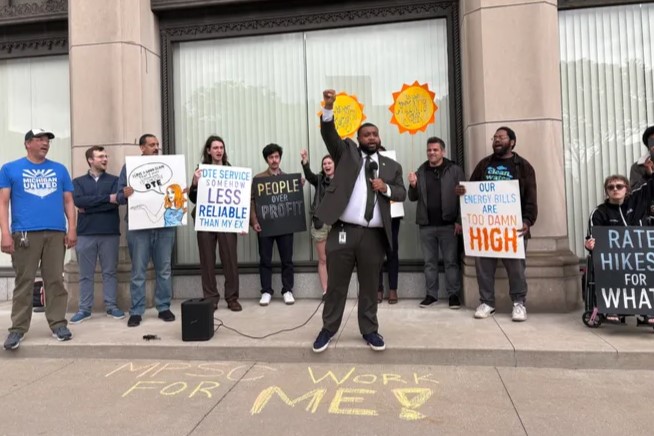
Michigan LCV held a rally with partners ahead of a Michigan Public Service Commission meeting in Detroit to oppose DTE Energy’s $547 million rate hike proposal. Credit: Michigan LCV
It’s no secret energy costs are too damn high. If you haven’t already, you are likely to see your energy bills go up in the next couple of months….and continue to rise for the foreseeable future.
Your high energy bills aren’t an accident or a coincidence. They are the direct result of Trump administration policies that benefit Big Polluters at our expense. Here are the top five things you need to know about why your energy bill is skyrocketing – and how you can tell Congress to fight back by passing the Energy Bills Relief Act.
1. Higher energy bills are part of a nationwide trend
The costs of many household expenses have been going up – food, housing and energy. If you have noticed your energy bills going up since the beginning of 2025, you are not alone. Since President Trump took office in January 2025,residential energy costs across the country rose a whopping 13%. Prices are expected to increase an additional 5.8% in 2026.
Michigan state representative Donavan McKinney spoke (left) at a rally organized by Michigan LCV and partners ahead of a Public Service Commission meeting to oppose DTE Energy’s $547 million rate hike proposal. Credit: Michigan LCV
2. Data centers are driving a huge increase in energy demand
Energy demand is expected to rise a staggering25% by 2030thanks to the rise of power-hungry data centers thatpower AI and other Big Tech. That rising demand means energy companies may try to raise their prices for everyone, unless they can increase energy supply.
Meanwhile, the Trump administration is cancelling the cheapest and fastest way to increase supply by blocking efforts to bring clean energy online. Without increased supply from clean, affordable, and quick to deploy energy sources like wind and solar, prices will continue to rise along with demand.
In addition, the nation’s energy grid can’t support this kind of energy demand, and building the infrastructure to handle rising demand costs money. This cost is being unfairly passed onto everyday customers in the form of higher electric bills.
Utility companies are increasing our rates to build out the energy infrastructure Big Tech companies need to meet their high energy demand. With AI data centers springing up all over the country, this problem is only going to get worse unless we take action to protect consumers.
3. Energy utilities are raising prices to line shareholders’ pockets
While they raise costs to meet Big Tech’s demand, many utilities are hiking prices even more just to increase their profits. In an analysis of 102 gas and electric utilities’ recent or proposed rate hikes, dozens “cited increasing shareholders’ returns as a reason” for the hike, according to the Center for American Progress.
In many states, a portion of customers’ utility bills goes straight into the pockets of utility shareholders. This rate of return for investors is around 10% on average– double the standard benchmark. Across the country, this overpayment adds up to $7 billion annually flowing from customers to shareholders, according to a study out of the University of California at Berkeley.
Utilities across the country are overcharging us and raking in massive profits while we struggle to keep the lights on. Utilities provide a public service for the government by providing energy to customers, but they operate like businesses. This means profit is their primary concern when it should be the people.
LCV and our state partners have been working around the country to fight against rate increases and to expand clean energy.
Chispa Nevada and Nevada Conservation League held a press conference in front of a Public Utilities Commission of Nevada public session to oppose a proposed rate hike. Members and supporters also gave public comments at the session. Credit: Chispa NV and NCL
4. Congressional Republicans’ so-called “Big Beautiful Bill” is jacking up energy prices
President Trump and congressional Republicans’ so-called “One Big Beautiful Bill” (aka the Big Ugly Bill) repealed tax credits for clean energy production like wind and solar established in the Inflation Reduction Act (IRA). Since the IRA was passed in 2022, these tax credits have spurred billions of dollars in clean energy investment and jumpstarted clean energy production in the U.S. Rescinding these credits is killing good-paying jobs and ensuring there isn’t enough supply of affordable clean energy to meet growing demand.
5. President Trump is canceling clean energy projects to prop up Big Polluters
President Trump is simultaneously canceling renewable energy projects and boosting fossil fuel energy production. This creates a perfect storm for higher energy bills and more pollution.
Trump has waged an all-out war on offshore wind. His administration has sued to stop some projects and issued stop work orders for others, including Revolution Wind off of Connecticut and Rhode Island, which was 80% complete at the time. Millions of dollars had already been invested in these projects, and they were on track to provide clean, affordable energy to over one million homes that could now be forced to rely on polluting fossil fuels.
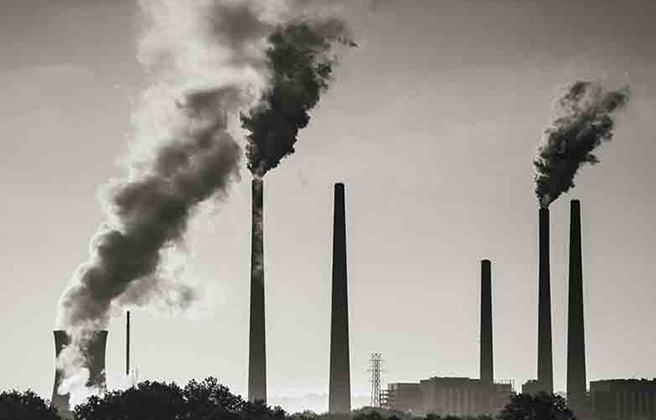
While he is shutting down clean energy projects, Trump is forcing polluting coal plants to stay open despite many being scheduled for retirement. The continued operation of these outdated, obsolete coal plants, such as the Campbell Coal Plant in Michigan, is not only stalling the transition to affordable clean energy and forcing nearby residents to continue breathing polluted air, but is actually costing ratepayers millions of dollars a day.
Continuing to operate coal plants is both more expensive and more dangerous than transitioning to clean energy sources, so why is Trump fighting so hard to keep American energy stuck in the past?
You may recall a certain infamous, backdoor meeting with Big Oil CEOs where then-candidate Trump promised he would roll back regulations for fossil fuels in exchange for a $1 billion donation to his campaign. Since he took office, Trump has been making good on that promise to prop up Big Oil’s profits. Simply put, President Trump is driving up our energy bills and harming our health all to benefit his Big Polluter buddies.
Higher energy bills impact us all, but they are hardest felt by communities and families that already struggle to pay their bills. These tend to be the same communities that already face greater threats from climate change, such as extreme heat, which will only worsen the more we’re forced to rely on dirty energy.
Tell Congress: We Need Lower Energy Costs
While they slash clean energy and their Big Ugly Bill drives up energy prices, the Trump administration and Republicans in Congress are making life harder for the very people they are elected to represent.
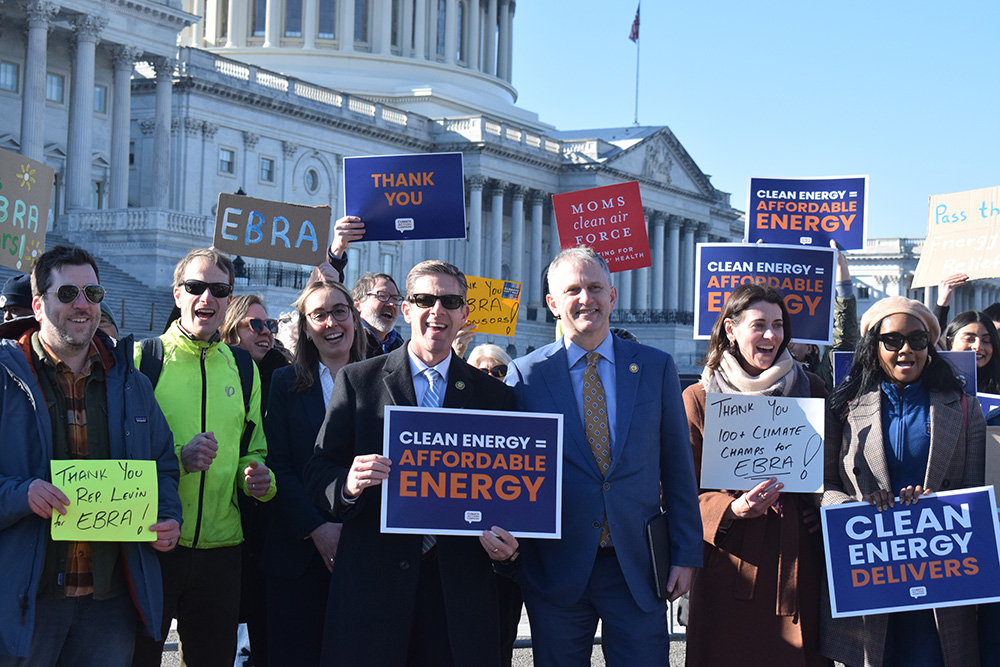
Meanwhile, Democrats in Congress are taking action to make energy more affordable with their Energy Bills Relief Act (EBRA). This bill will lower costs for our families by ensuring access to clean, affordable energy.
Representatives Sean Casten (IL-06) and Mike Levin (CA-49), alongside 122 Democratic cosponsors, have introduced EBRA in the House. To stop Trump’s skyrocketing energy costs to save our families money, EBRA would:
Provide assistance for energy bills to millions of households.
Motivate electric utility companies to launch programs to save customers money.
Support weatherization and other energy efficiency programs.
Ensure the cost of powering large energy consumers, like data centers, doesn’t fall on households and small businesses.
To expand clean energy to meet demand and further bring down costs, the bill would also:
Reverse the Trump administration’s attacks on clean energy and restore clean energy tax credits.
Expand community solar to bring affordable, clean solar power to more communities.
Stop presidents from abusing the permitting process to block clean energy projects and prop up fossil fuels.
Responsibly develop more clean energy projects and speed up processes to connect them to the grid.
tell them the so-called “One Big Beautiful Bill” is driving up your energy costs,
ask them to support the Energy Bill Relief Act, and
remind them that their job is to represent the best interests of their constituents, not the oil and gas industry!
Act Now
Tell Congress: Support the Energy Bills Relief Act
The Energy Bills Relief Act is a new bill cosponsored by over half of House Democrats to rein in energy costs with clean, affordable energy. To cut pollution and utility bills for millions of people, EBRA will ramp up clean energy like wind and solar, hold data centers accountable, expand heating assistance for low-income families, and more. Send a message to Congress to show your support for the Energy Bills Relief Act today!
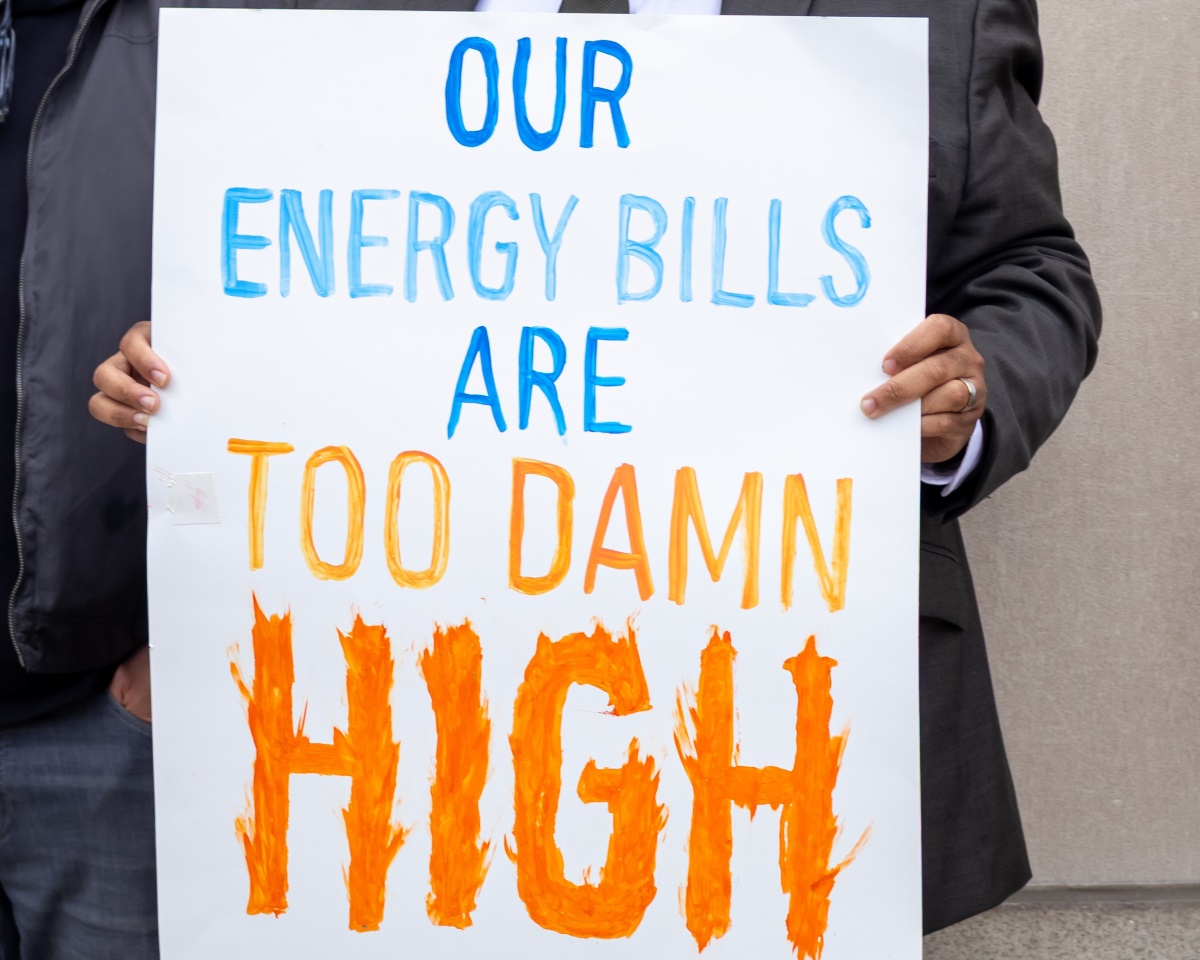 Michigan LCV held a rally with partners ahead of a Michigan Public Service Commission meeting in Detroit to oppose DTE Energy’s $547 million rate hike proposal. Credit: Michigan LCV
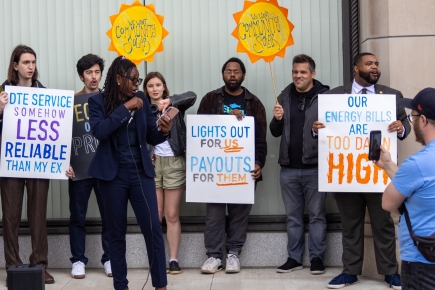
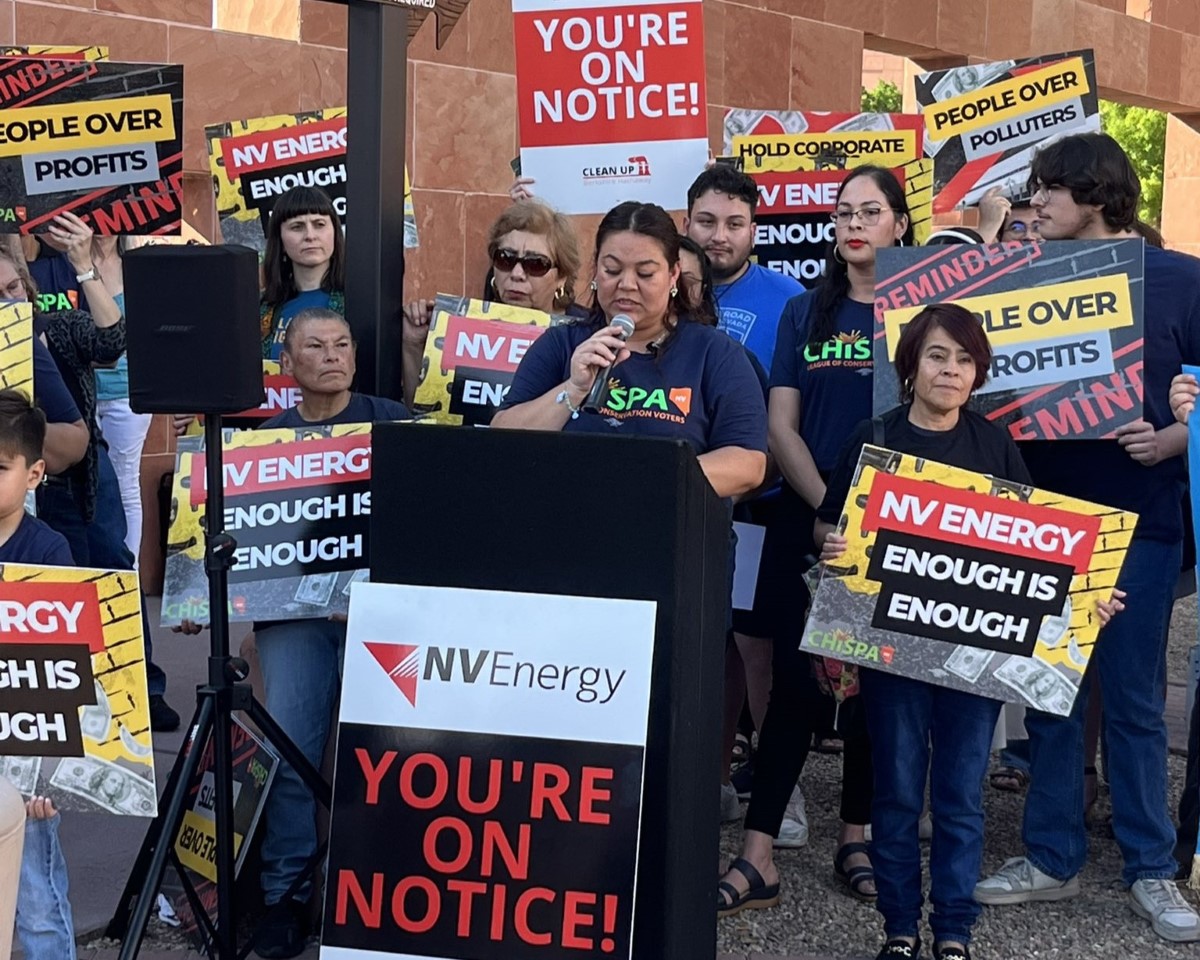 Chispa Nevada and Nevada Conservation League held a press conference in front of a Public Utilities Commission of Nevada public session to oppose a proposed rate hike. Members and supporters also gave public comments at the session. Credit: Chispa NV and NCL