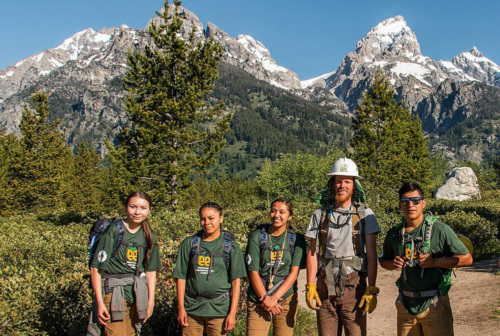
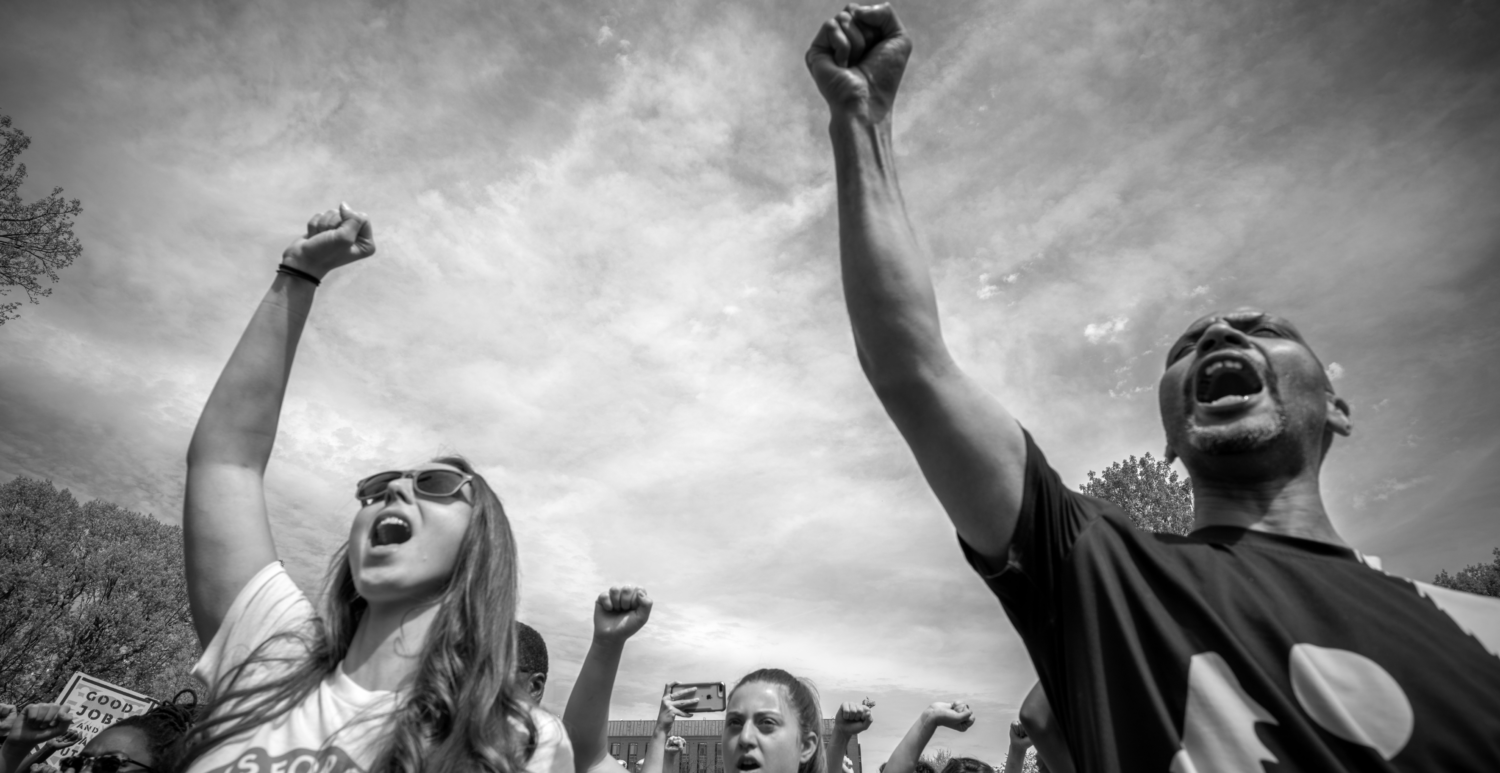
Our country’s public lands and waters are vital for people and the planet. From the local to the federal level, we fight to protect our public lands, increase access to the outdoors, and safeguard cleaner air and water in our communities.
Public lands and waters belong to all of us, and provide enormous benefits to communities around the country. They provide spaces for us to spend time in nature, and support local economies. They sustain clean water resources and safeguard wildlife habitats. They also make us more resilient to climate change.
Our public lands and waters also hold natural, cultural, historical, and spiritual significance. National monuments in particular protect places of extraordinary cultural and historical value, including places sacred to tribes and Indigenous communities.
So that public lands remain in public hands, we are fighting to stop the sell-off of public lands and waters to Big Oil and other polluters across the United States. We’re also working to stop the expansion of fossil fuel extraction on our lands and waters, and ensure places like the Arctic Refuge are never drilled.
We know that public lands and waters are widely supported by people from all walks of life. Through this work, we ensure communities across the United States have more access to our country’s great outdoors, cleaner air, and cleaner water.
Leveraging the power of the Conservation Voters Movement (CVM), we build local, state, and federal support to defend existing protections and secure new ones.
We advocate for policies that advance public lands protections and hold decision makers accountable. We also work to increase opportunities for all people to experience and enjoy our public lands.
In past years, we have secured national monument protections for landscapes across the country, pushed Congress to provide billions of dollars for national and community parks, and won bans on new oil and gas leasing.
While many people think of our country’s public lands as protected from industrial development, a staggering amount of drilling and mining occurs on them. In fact, nearly one-quarter of all U.S. carbon emissions are generated from energy extracted on public lands and waters. This is because our public lands are managed for multiple uses, including energy development, timber harvesting, livestock grazing, and recreation.
While many of these uses are compatible with conservation, some like drilling, mining, and logging are not. We work to reduce harmful uses of our public lands, and recognize that some places are too valuable to be developed. In places that hold enormous natural, cultural, spiritual, or historical value, we fight to stop development and win national monument protections.
We also believe our public lands can be used as a climate solution. We work to protect forests, wetlands, mangroves, and other areas that store carbon in the ground. And we fight to increase solar, wind, and other clean forms of energy on these landscapes. As the climate crisis intensifies, our public lands can increase resilience to a changing climate and help sustain a livable environment for all.
The United States has a painful legacy of racism and exclusion toward Indigenous peoples and communities of color. Public lands policy is no exception, and patterns of inequity continue to the present day.
Many low-income and communities of color lack access to nature. Many national parks and public lands do not reflect the stories of diverse communities. And many public lands are inaccessible and unwelcoming to disabled people, people of color, people with low income, Indigenous tribes, and LGBTQ+ communities.
LCV seeks to tear down these barriers and expand access to public lands for all people. We pursue policies that protect nature and share its benefits more equitably with all communities. We recognize that our public lands rightfully belong to Indigenous people, and work to foster greater sovereignty and co-management of public lands. And we work to protect places that tell a complete story of the United States.
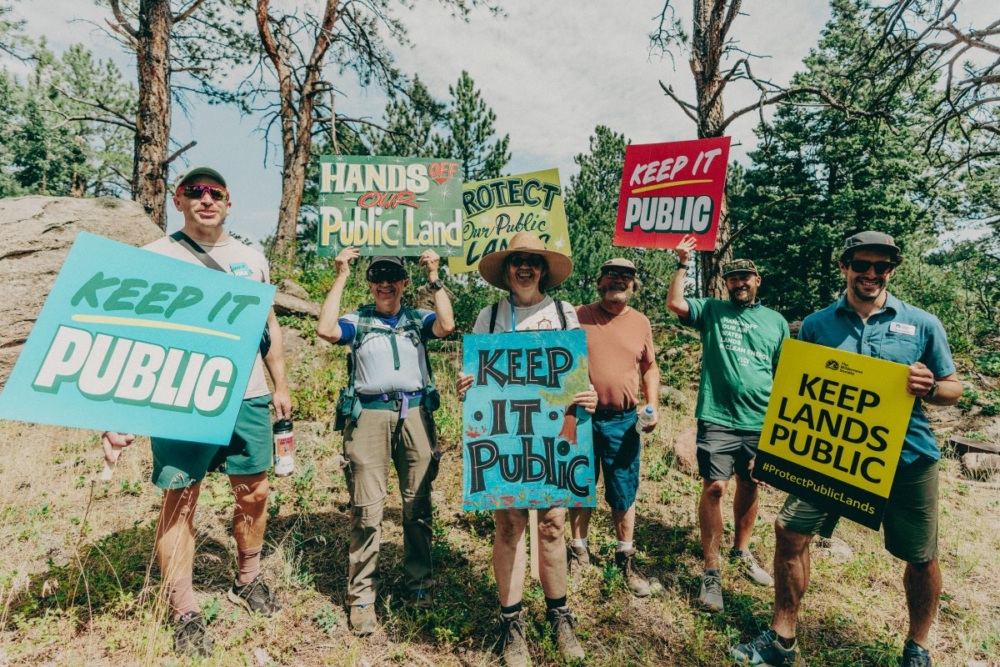
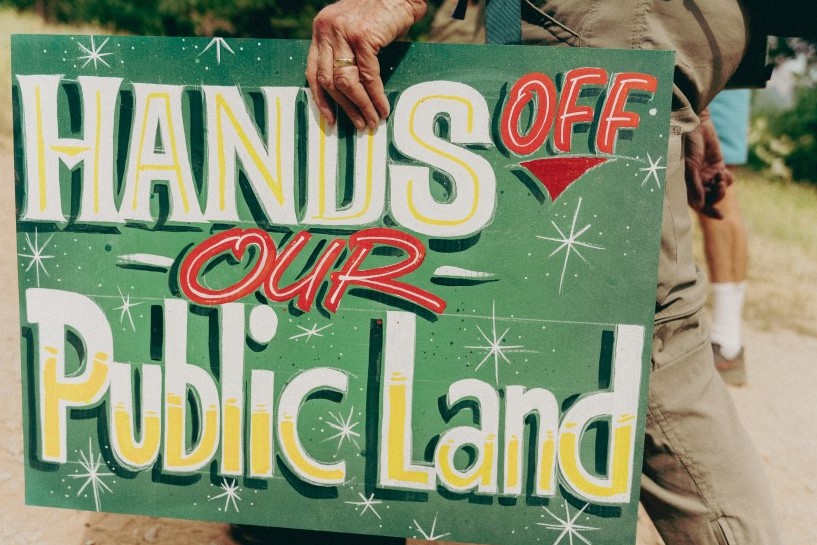
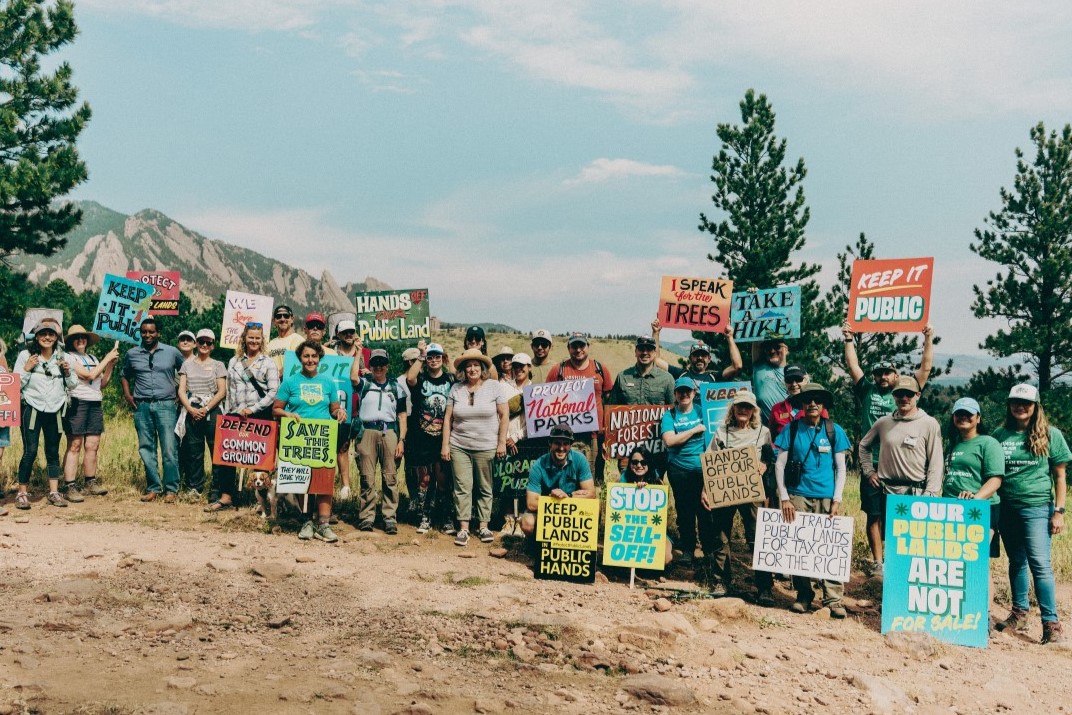
Communities members advocate for public lands in Boulder, Colorado. Credit: TaskForce
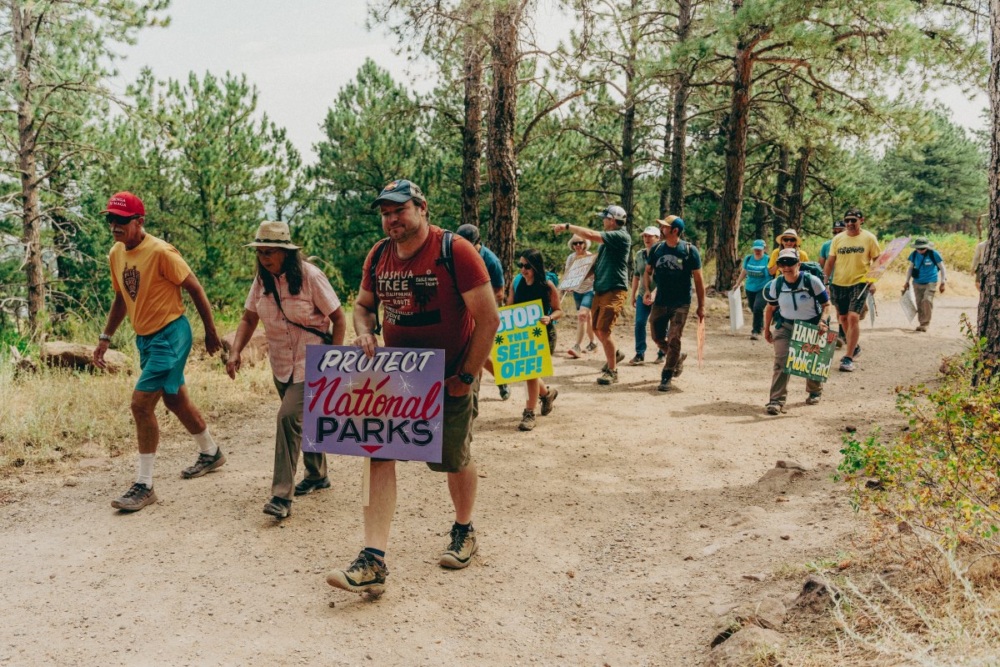
LCV volunteers and community members hike through the Flatirons in Colorado. Credit: TaskForce
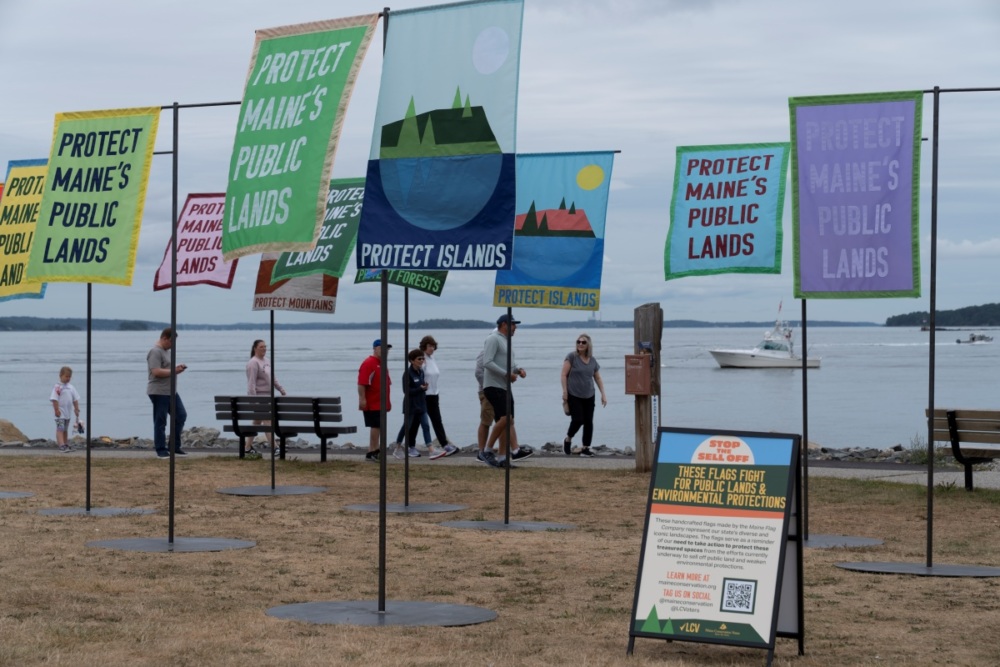
LCV signs and flags celebrate Maine’s public lands. Credit: TaskForce
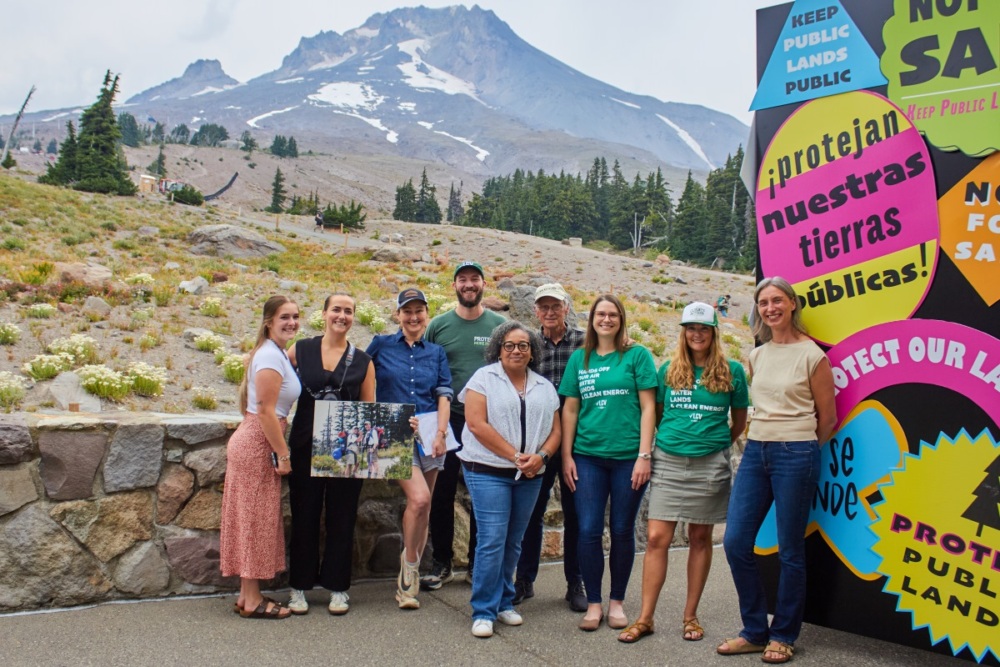
LCV and Oregon LCV staff with Rep. Dexter celebrating our public lands. Credit: TaskForce
From day one, the Trump administration and its allies in Congress have launched countless attacks on our public lands and waters. We're tracking these attacks to expose the administration’s efforts to open lands to corporate polluters – at the expense of our communities and our environment.
Timeline: Trump’s Attacks on Public Lands and Waters
Every Monday, we round up five of the best good climate news stories we're celebrating. This week we cover new protections for the Western Arctic and public lands, increased prices for oil and gas drilling leases, clean energy permitting successes, and the expansion of four national wildlife refuges.
Every Monday, we round up five of the best good climate news stories we're celebrating. This week we cover the Biden-Harris administration's plans to cut carbon and methane emissions, a new offshore wind development, the nation's first utility-scale agrovoltaic facility, and the Amazon Protection Program.
There's a lot of good news on climate, but it can be harder to find than all of the bad news. Every Monday, we round up five of the best good climate news stories we're celebrating. This week we cover Biden's new American Climate Corps, the EPA's announcement of $4.6 billion in clean energy grant funding, and more.
July was Earth's hottest month on record, and the extreme heat has spurred heat emergencies, wildfires, severe drought, and other events that threaten our communities. Urban green space development is a crucial tool to cool them. Learn how it works, and how you can help with projects in your own community.
For nearly a decade, Big Oil has been trying to run a natural gas pipeline 300 miles across Virginia and West Virginia, cutting through the Jefferson National Forest and crossing hundreds of waterways and wetlands. The Mountain Valley Pipeline (MVP) will have devastating consequences not only for the environment, but also for the many communities along its path whose health will be jeopardized by air and water pollution. Here’s what you need to know.