Voting rights, the very foundation of our democracy, are under attack.
In 1965, Congress passed the Voting Rights Act. The bill ensured protections against discrimination in voting. But, for decades, conservatives in federal office have chipped away at these protections. Trump, Republicans in Congress, and the current conservative Supreme Court have accelerated these attacks.
The Supreme Court greenlit racist gerrymandering earlier this year in their decision in Louisiana v. Callais. Trump and congressional Republicans have repeatedly attempted to pass the SAVE Act, a voter suppression bill. All together, they have weakened the voting power of communities of color, women, transgender individuals, and communities with low-income.
If that sounds bad, it’s because it is. But our communities have the power to fight back. Faced with the Trump administration’s rapid dismantling of our democracy, LCV, our state affiliates, and partner organizations are already building power nationwide. We are working to ensure our country is resilient against federal attacks and our democracy is protected from sliding into authoritarianism.
We know we can create a democracy where:
Everyone’s voice is heard and represented in government.
We can stand strong against the government’s attempts to take away our rights.
We can take meaningful climate action.
An important step toward building this reality is protecting voting rights at the state level through state Voting Rights Acts. Here’s a closer look at the impact of voting discrimination, and how LCV and our state leagues are fighting back with state VRAs.
Reclaiming voting power in light of federal attacks
For decades, targeted attacks on voting rights have made it significantly harder for completely eligible people of color and low-income people to vote. In the conservative Supreme Court’s 2013 ruling in Shelby County v. Holder, justices claimed racial discrimination in voting was no longer a concern.
Following that decision, local governments passed discriminatory voting laws. The participation gap between Black and White voters, which had been shrinking for years, began to widen.
Since the Supreme Court ruling in Shelby County v. Holder, the gap between Black and white voter participation has increased significantly.
Source: Brennan Center for Justice
States are taking action to combat the continued attacks on voting rights. Across the country, states are working to protect the right to vote and build power toward creating a system that works for everyone.
This includes passing state Voting Rights Acts.
LCV and our 30 state affiliates in the Conservation Voter Movement have been on the front lines of this fight for years. Read more about LCV and the CVM’s democracy work!
What is a state Voting Rights Act?
State Voting Rights Acts (VRAs) guarantee voters are protected by state law. They require things like:
Preclearance: Requires local election authorities to get approval from state authorities before changing any voting laws to ensure the changes are not discriminatory.
Language access: Requires ballots and election information to be available in multiple languages.
Legal protections to safeguard the rights of voters of color in the face of current conservative Supreme Court decisions: These protections include the right for individual voters to sue the government. They also direct the courts to assume a voter’s rights have been violated during legal proceedings, in the same way that courts must assume any defendant is innocent until proven guilty.
State VRAs matter to everyone, even if you don’t live in a state that currently has one in effect. Establishing state level protections creates a model for federal progress. These laws highlight what is possible and what legislative solutions work. State VRA wins are helping build momentum and power for federal action that affects the whole country.
Key state VRA wins across the country
States across the country are protecting voting rights with state-level VRAs.
LCV state affiliates have played a key role in passing state VRAs across the country. And, we’re just getting started. Each year, we are learning, growing, and building power to expand voter protections. Here are the stories behind several of our key wins.
Connecticut
In 2023, Connecticut was lagging behind its neighbors in the northeast on voting protections and accessibility. The state did not have provisions for No Excuse absentee voting, which allows any voter to vote by mail, or early voting.
Connecticuters were fed up. As the legislative session began to heat up, they demanded action on voter protections.
Connecticut LCV channeled voters’ frustration to quickly mobilize people to support a VRA. CTLCV hosted two advocacy events, offered testimony in support of the bill, and mobilized voters to lobby their representatives.
And their advocacy efforts paid off. Big time. Not only was CTLCV able to get the Connecticut Voting Rights Act introduced in the legislature, the bill was passed in the same session.
Connecticut’s passage of the Voting Rights Act showed what is possible when advocates and voters come together to demand a stronger, more accessible democracy. CTLCV was proud to help build the momentum that turned years of frustration into meaningful action, ensuring that every Connecticut voter, especially those in communities that have historically faced barriers to the ballot, has a stronger voice in the decisions shaping their communities and future.”
Connor Yakaitis, Deputy Director of CTLCV.
New Jersey
New Jersey’s path to passing their VRA was a little more complicated. The legislature struggled to build momentum for the bill, delaying it year after year.
For three years, New Jersey LCV served as key advisors and advocates for the bill. Earlier this year, they got it across the finish line. The team at New Jersey LCV used their existing relationships with state legislators to gather co-sponsors and make the VRA a priority. They also facilitated conversations between lawmakers and the communities most impacted by attacks on voting rights. The final bill ensures protections for voting access.
New Jersey LCV secured a huge win with the election of Governor Mikie Sherrill. After taking office, Governor Sherrill prioritized the bill’s passage.
Today’s vote is a victory for every New Jerseyan who believes that power rests with the people. We are seeing an alarming, coordinated effort in Washington to dismantle the foundations of our democracy, including the SAVE Act — a bill designed to create massive hurdles for eligible voters.”
Allison McLeod, Interim Executive Director of New Jersey LCV, on the passage of the NJVEA out of the General Assembly.
Washington
Washington originally passed its VRA in 2018. However, the 2018 bill did not include a preclearance provision. Preclearance is a critical protection for voting rights. It requires local governments to get approval for changes to their election laws. This can stop discriminatory voting laws before they take effect, instead of requiring people to challenge laws after they have been implemented.
Washington Conservation Action helped organize a massive coalition with dozens of organizations. The coalition agreed on a common legislative priority agenda. This included passing a preclearance provision.
The coalition’s shared agenda allowed them to launch a strong push to pass the legislation. Thanks to their advocacy, the legislature passed preclearance earlier this year.
More progress
LCV state affiliates engaged in other VRA fights as well, including:
Minnesota
Conservation Minnesota joined a statewide democracy coalition and signed onto letters of support for the Minnesota Voting Right Act, which passed in 2024.
The bill allows Minnesotans to sue against racially discriminatory voting practices. It also protects Minnesotans from voter suppression and vote dilution. Finally, the bill ends prison gerrymandering. This means incarcerated people will be counted at their last address instead of where they are incarcerated.
Maryland
Maryland LCV encouraged legislators to support the Maryland Voting Rights Act. Many of these legislators had not previously engaged in work to protect voting rights.
Maryland LCV also worked with a coalition to provide testimony, policy and lobbying expertise to help pass the bill. The Maryland Voting Rights Act bans cities and counties from any policy that could weaken the voting power of specific racial groups. It passed earlier this year.
Colorado
In 2025, Colorado passed the Colorado Voting Rights Act. Conservation Colorado provided key communications support, social media engagement, and letters from local electeds to pass the bill. The final bill includes strong provisions for challenging discriminatory voting practices.
With every state VRA that is passed, we are learning and building power toward a stronger democracy and climate. Across the country, LCV’s state affiliates are getting the job done. And our momentum continues to grow.
Looking ahead to the next state VRA fights
Leading up to the 2028 elections, we expect the Trump administration and its allies will make more attempts to suppress voters. These attacks will disproportionately impact women, young people, and voters of color. Building power now will help us stand strong in the face of these attacks and ensure we have free and fair elections in 2028.
States across the CVM are continuing to lead the fight. LCV’s state affiliates in Maine, Vermont, Michigan, Pennsylvania, and Wisconsin are working to pass VRAs. VRAs are advancing in other states as well.
Wins at the state level are building momentum to pass federal voting rights laws, like the John Lewis Voting Rights Advancement Act (JLVRAA). If passed, the JLVRAA would restore strong voter protections guaranteed by the original Voting Rights Act of 1965, which have been weakened in the decades since its passage.
What can I do to help advance the CVM’s work to protect voting rights?
Feeling inspired? Join LCV and our state affiliates in the Conservation Voters Movement in the fight to protect voting rights.
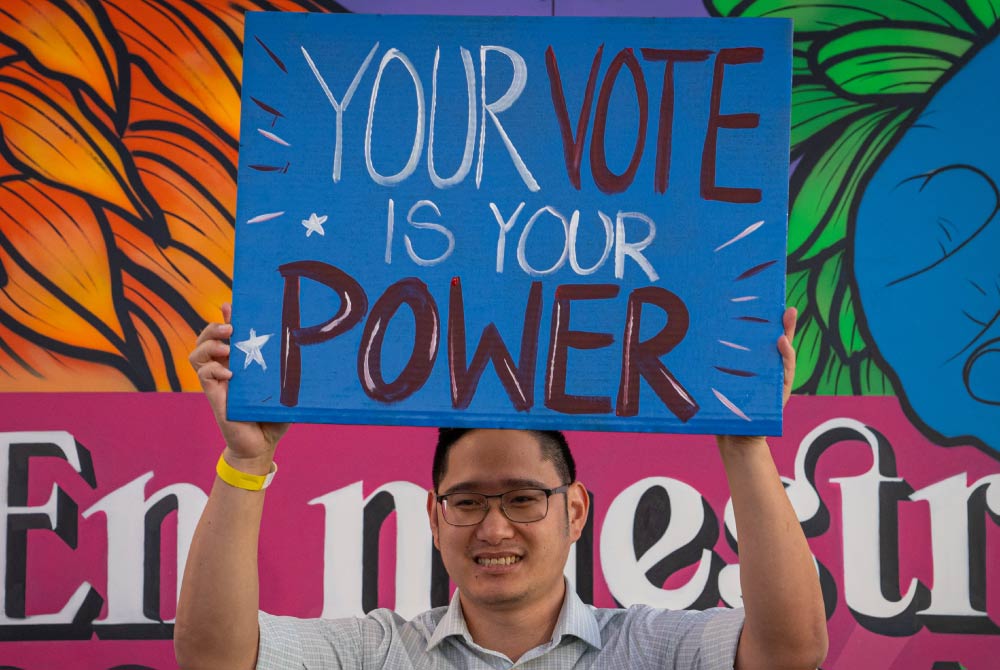
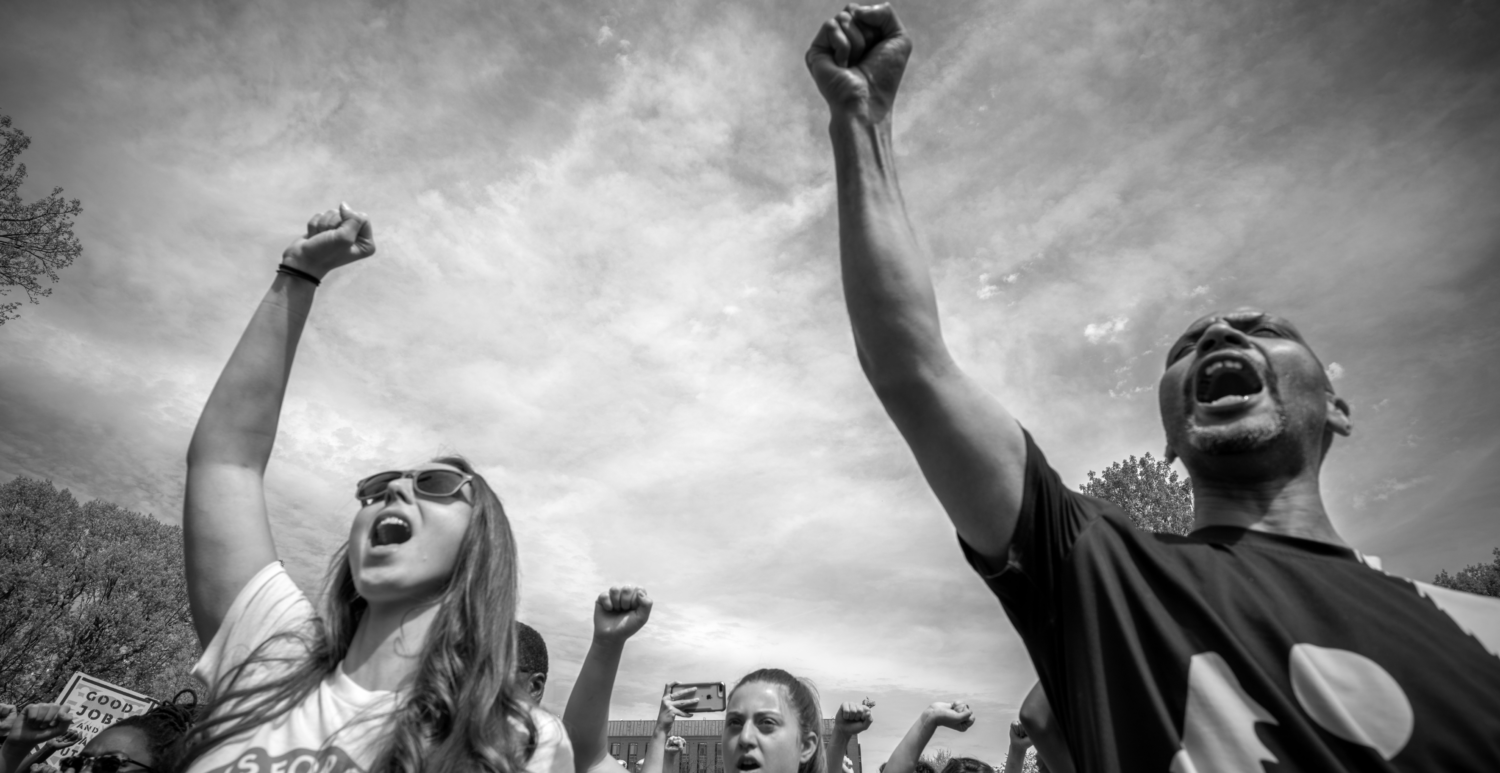
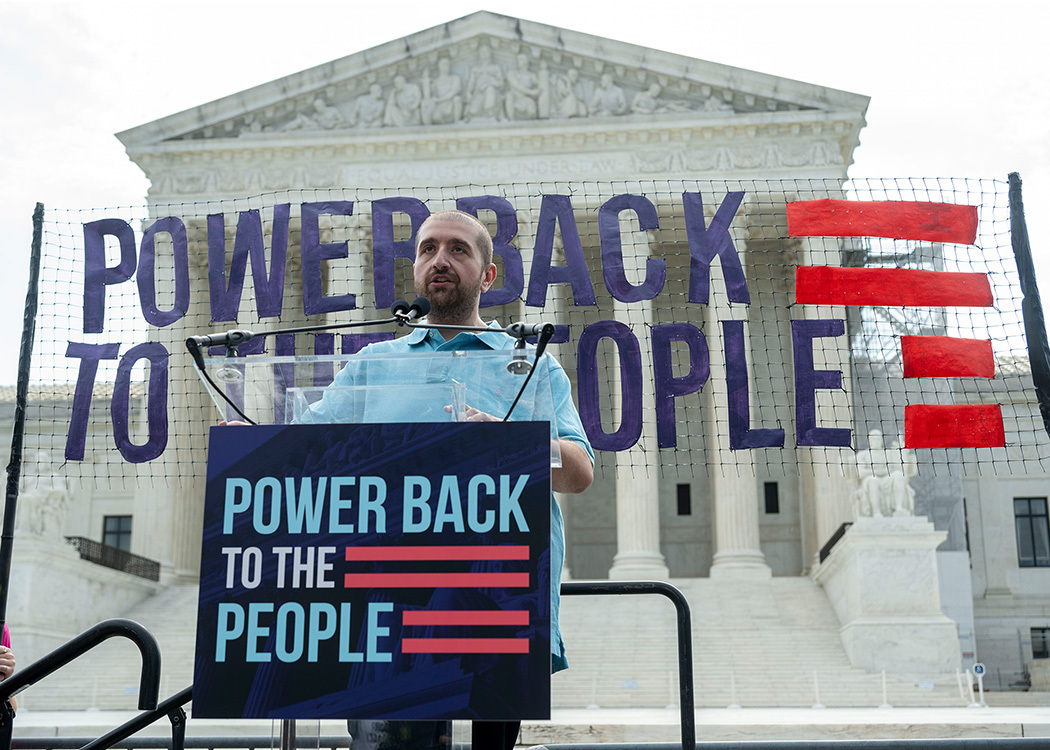 Photo credit: United for Democracy, Photographer Kevin Wolf.
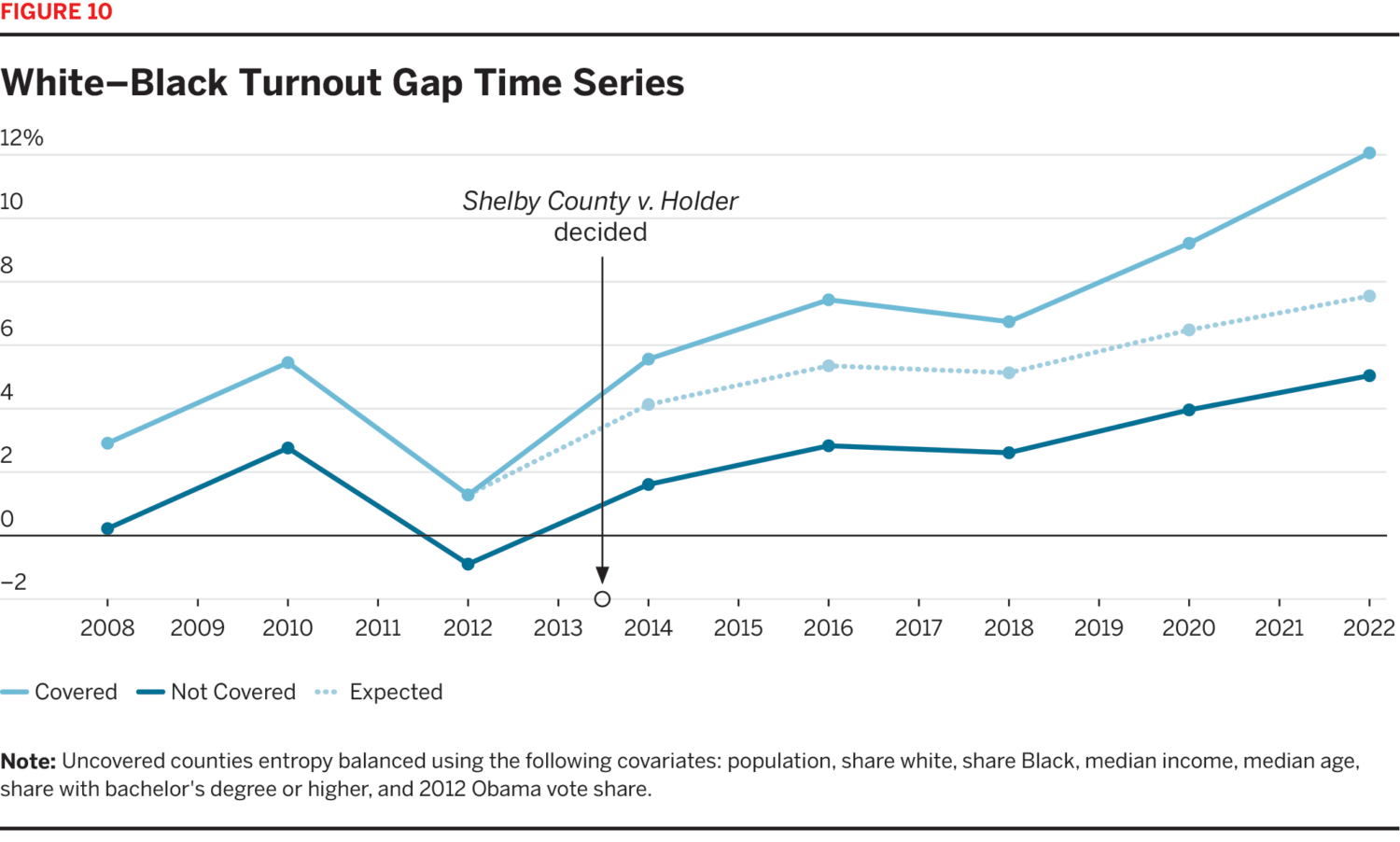 Since the Supreme Court ruling in Shelby County v. Holder, the gap between Black and white voter participation has increased significantly.
Source: Brennan Center for Justice
Since the Supreme Court ruling in Shelby County v. Holder, the gap between Black and white voter participation has increased significantly.
Source: Brennan Center for Justice
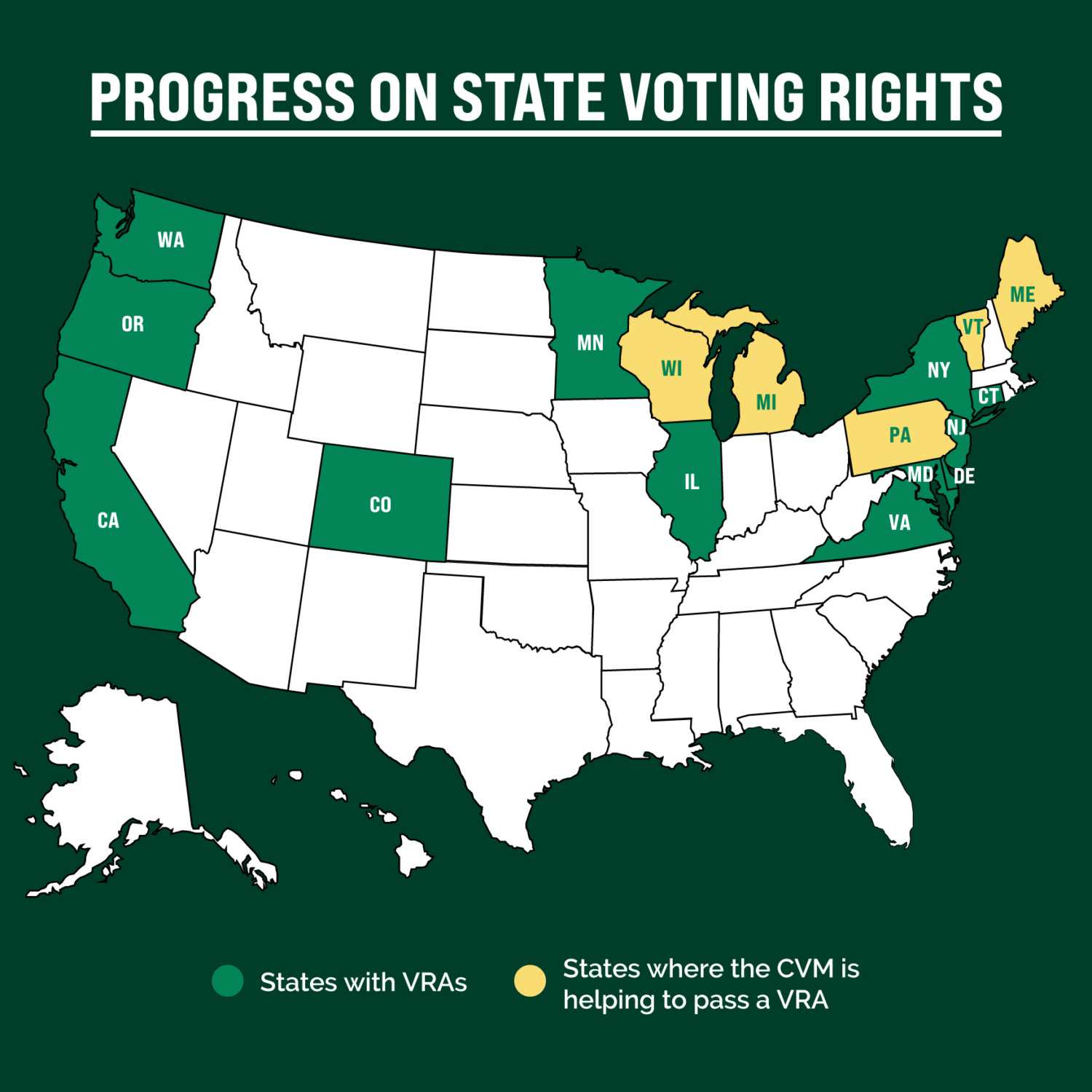 States across the country are protecting voting rights with state-level VRAs.