This Amazon AI Data Center in New Carlisle, Indiana, sits on 1,200 acres of land and is one of thousands of data centers in the U.S. Read more about data centers in Story 2 below.
Learn about summer primary victories, increasing data center and polluter accountability, the winning combination of clean energy and affordability, and the latest endorsements of candidates who will help stand up against the chaos and cruelty of the Trump administration.
Read Our Top Stories
1. Primary Election Wins Pave the Way to November Victory
Environmental and democracy champions scored numerous victories during this summer’s busy primary season — positioning climate, clean energy, and energy affordability as central campaign issues this fall. LCV Action Fund and our state affiliates played key roles in these wins.
Federal Victories
LCV Action Fund’s endorsed candidates for the U.S. House and Senate won a bevy of primary races. These victories provide a strong foundation for candidates who support clean air, clean water, and climate action to win the U.S. House and make gains in the U.S. Senate in November:
Our state affiliates made similar gains in governors’ races and contests for state legislative seats through education, outreach, and voter mobilization:
For the first time in the organization’s history, Maine Conservation Voters (MCV) Action Fund endorsed a candidate in the Democratic primary for governor, throwing their support behind Hannah Pingree’s campaign.
Their program reintroduced Pingree to voters, highlighted her experience, her plans to fight rising utility costs, and her endorsement by Governor Mills.
MCV Action Fund’s campaign played a defining role in the primary, reaching voters through broadcast and cable TV, digital outreach, direct mail, and texting to help Pingree secure the Democratic nomination.
Conservation Voters New Mexico (CVNM) Action Fund endorsed former Secretary of the Department of Interior Deb Haaland for governor. She defeated oil and gas darling Sam Bregman 72.3% to 27.7%, scoring a major victory for the conservation movement.
Haaland was one of the first Native American members of Congress, and the first Native American to serve in a White House cabinet position. If elected, she will become the country’s first ever Native American woman governor.
CVNM Verde Voter’s Fund educated and mobilized voters to cast their ballots through direct mail, phone, door knocking, and the media.
CVSC endorsed 7 Republican and 6 Democratic incumbents in competitive primaries — all of whom have championed public lands and conservation.
CVSC Carolina turned out voters in these districts by investing in direct mail and texting to reach voters at home and on the go.
What’s Next
Our biggest environmental challenges require leaders who are committed to providing political solutions centered on the people they serve.
LCV and our affiliates will continue our work educating and turning out voters to help elect climate, environmental justice, and democracy champions up and down the ballot all across the country.
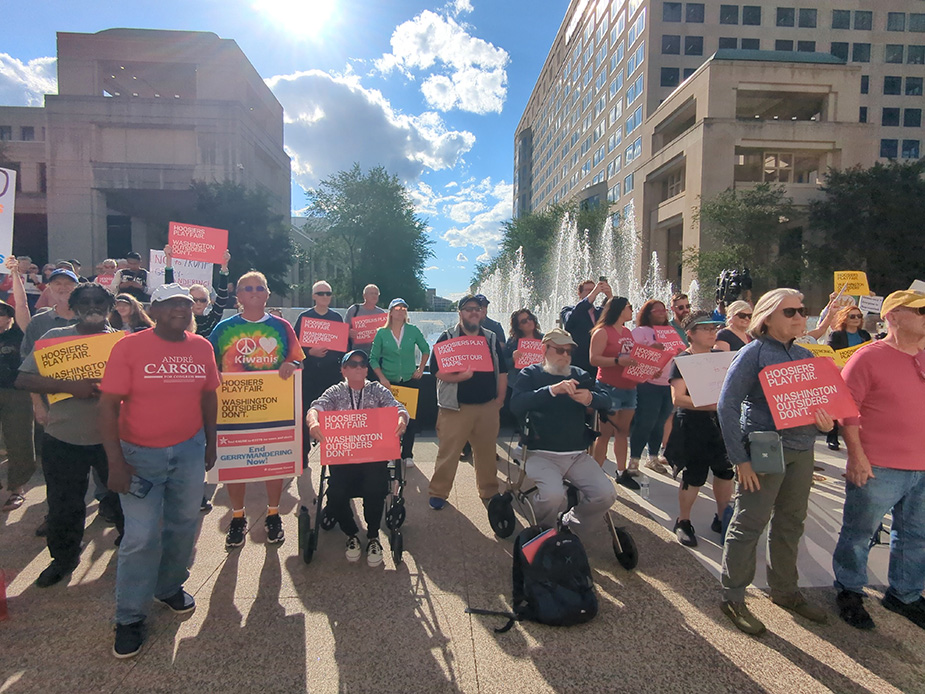
We are also engaged in safeguarding and expanding access to the polls, including defending fair maps, recruiting poll workers, and protecting the rights to freely and fairly vote early, by mail, and in person.
2. Reining in the Data Center Explosion
Picture a rolling southwestern ranchland dotted with sagebrush, rimmed by towering mountains, and home to more than 50,000 people and massive migratory bird populations. Now picture that landscape leveled to house a data center that is three times the size of Manhattan. If built, the proposed Stratos Project in Box Elder, Utah, will include its own polluting gas power plant and is expected to raise local nighttime temperatures by as much as 28 degrees.
The U.S. is home to nearly 40% of the world’s data centers, and their explosive growth has generated a public outcry in red, blue, and purple states alike. LCV and our state affiliates are working to protect communities and our environment by ensuring guardrails on data center projects — including requiring them to pay for their own energy and infrastructure, not pass costs to ratepayers, power with additional clean energy, and meet strong environmental and water usage safeguards.
Currently, 38% of people in the U.S. live within 5 miles of at least one data center.
There are currently well over 3,000 data centers in the U.S.
There are more than 2,000 additional data center projects being planned at present.
An average sized data center covers 100,000 square feet, but hyperscale data centers are as large as 10 million square feet.
Large data centers directly use up to 5 million gallons of water per day for cooling purposes, and those fueled by power plants can indirectly use 12 times that much.
Data Center Negative Impacts
Regardless of location, we all face mounting related risks, including:
Increased water and electricity costs coupled with decreased electric grid reliability.
Air pollution resulting from dirty energy generation to meet power demands.
Strains on water resources, including streams, rivers, lakes, and groundwater.
Inequitable distribution of benefits between data center owners and surrounding communities.
What We’re Doing About It
LCV and our state affiliates are working to ensure that data centers:
Provide meaningful community benefits.
Pay for the infrastructure and development required to operate.
Are transparent about their operations and impacts.
Avoid and mitigate adverse impacts on resources and rates.
Are powered by clean energy.
Are built in places where they are welcome.
We’re making progress, and below are just a few examples of recent wins:
IDAHO
Conservation Voters for Idaho (CVI) helped secure two common sense data center standards during the 2026 legislative session. These new standards protect Idahoans against energy bill increases due to data centers and require data centers to significantly decrease water use with closed-loop cooling systems. Next session, CVI will work on policy to repeal data center tax breaks and require data centers to use cleaner energy.
NEW JERSEY
New Jersey LCV successfully championed two new laws that hold large data centers accountable for their energy and water use. The first law requires that data centers pay their fair share of energy infrastructure costs, incentivizes them to provide their own clean energy or take action to increase energy efficiency elsewhere, and ensures they’re first to have their energy use curtailed during grid emergencies. The second law requires that data centers submit water and energy use reports to provide a clear picture of their impact to the state and communities. New Jersey LCV will continue to work on legislation that will make new clean energy for data centers — paid for by the data center companies — mandatory.
NEW YORK
New York LCV successfully advocated for responsible data center development, resulting in Governor Hochul’s recent executive order that puts a one year pause on data center permitting to allow state regulators to create safeguards for future development. “Governor Hochul’s executive order is a thoughtful step that creates the time needed to establish strong guardrails so future development supports our electric grid, our environment, and the New Yorkers who depend on both,” said New York LCV President Julie Tighe.
PENNSYLVANIA
Conservation Voters of Pennsylvania (CVPA) successfully advocated for strong clean energy standards in the Governor’s Responsible Infrastructure Development (GRID) Standards, an initiative aimed at managing the rapid expansion of large data centers in the state. CVPA also helped shape Governor Shapiro’s second executive order that further centers environmental safeguards in data center development, calling for greater transparency and protections for Pennsylvania ratepayers.
What’s Next
LCV’s state affiliates are actively working on data center transparency, accountability, and guardrails, including Illinois Environmental Council, Stewardship Utah and Wisconsin Conservation Voters. Our affiliates are organizing, mobilizing, and advocating for protections that will require data centers to bring their own renewable energy, establish standards for worker protections, energy efficiency, and water usage, and ensure protections for neighboring communities.
3. Clean Energy Is the Solution to Rising Energy Costs
Thanks in part to our decades of work advancing clean energy across the country, wind and solar power are now the least expensive energy sources. Nonetheless, people across the country are saddled with rising electric bills, and many face painful choices between purchasing necessities like medication and food, or heating or cooling their homes. LCV and our state affiliates are doing something about it.
We’re engaging and mobilizing the public to take action to demand solutions and hold elected officials accountable for their failure to address the energy affordability crisis. Together with our state affiliates in the Conservation Voters Movement, we’re using a variety of approaches to make sure people understand the connections between clean energy and lower energy costs, and how both are key to creating a safe and sustainable future for everyone.
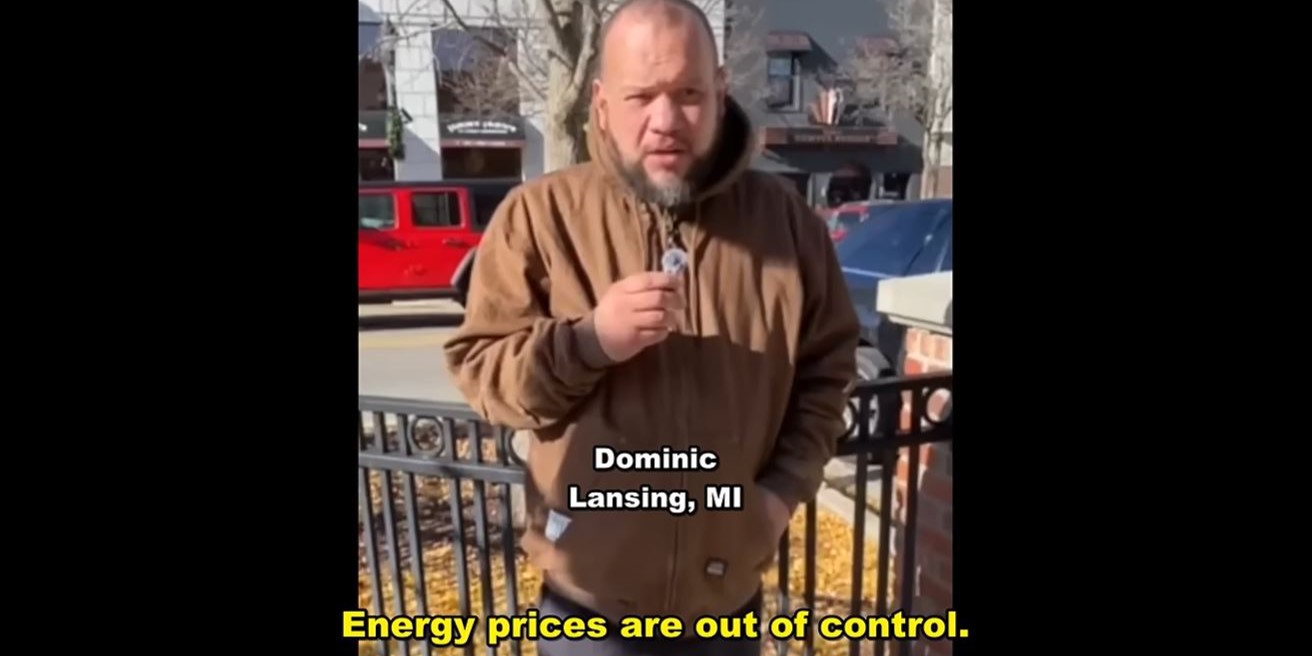
Our Michigan pilot program connected neighbors with neighbors by distributing videos of people’s unscripted stories using Instagram, Facebook, and YouTube ads.
One ad discusses Michigan Rep. Tom Barrett’s support for the 2025 Republican Tax Law, which gutted federal clean energy investments.
This ad performed three times better when tested against a traditionally produced ad — moving Rep. Barrett’s favorability rating down by more than 6 percentage points.
After this successful pilot, the program was scaled to reach more people with their neighbors’ stories, including in Michigan, Ohio, and Pennsylvania.
We’re partnering with social media influencers to get the word out about the day-to-day benefits of clean energy and the ways the 2024 Republican Tax Law is increasing the cost of living.
This approach has already generated over 16.5 million impressions in Alaska, California, Colorado, Georgia, Michigan, North Carolina, Ohio, Pennsylvania, Utah, Virginia, and Wisconsin.
The campaign cut across 11 battleground districts and highlighted the public’s concerns about rising costs and the advantages of clean energy.
We’re Winning Across the Country
ARIZONA: Tens of thousands of Arizonans will now have help managing rising energy costs thanks to the new Power AZ program, which provides low-income households with financial assistance for utility bills. LCV’s affiliate, Chispa AZ, successfully built coalitions and advocated with Gov. Hobbs and legislative leaders to help secure funding for this program.
INDIANA: Indiana enacted energy affordability legislation that establishes a low income energy assistance program, prohibits utility shutoffs during extreme heat, limits how often utility companies can raise rates, and sets performance incentives for utilities to prioritize energy affordability and reliability.Indiana Conservation Voters (ICV) collaborated with partners to outline energy affordability policies, built bipartisan support for these solutions, and mobilized residents to advocate for them. Due to their efforts, ICV secured 9 of their 11 policy priorities in the final energy affordability law.
MAINE: Under the newly enacted Energy Fairness Act, Maine utility regulators are now required to prioritize affordability for residential customers in their decisionmaking. In addition, regulators must conduct a comprehensive review of utility rates and develop an affordability metric to assess their impacts on customers. Maine Conservation Voters helped develop the legislation with champions over the past two sessions and rallied statewide partners and the public behind the bill to get it across the finish line this year. See story 4 below for more about progress in Maine.
NEW JERSEY: Gov. Mikie Sherrill recently signed three energy-related bills aimed at reducing electricity costs by increasing oversight of utility companies, prohibiting them from passing unnecessary costs onto ratepayers, and requiring large data centers to pay their fair share of energy infrastructure costs. Sherrill also announced immediate utility bill credits for millions of New Jersey residents. New Jersey LCV pushed the governor to ensure clean energy and energy affordability were top issues when she took office and developed a 100-day agenda and policy guide identifying priorities. New Jersey LCV’s legislative advocacy program activated thousands of constituents, recruited bill sponsors, and secured key amendments.
FEDERAL: LCV and our state affiliates across the country are also working to build support for the Energy Bills Relief Act. This comprehensive legislation is cosponsored by over half of House Democrats to rein in energy costs with clean, affordable energy. It will cut pollution and utility bills for millions of people, ramp up clean energy like wind and solar, hold data centers accountable, and expand home energy assistance for low-income families.
4. Maine Lays the Groundwork for Polluters to Pay for Damages
A new law passed in Maine aims to hold the world’s largest oil and gas companies financially responsible for the climate change-related harm they cause. The state will calculate the cost of damages caused by climate change between 1995 and 2024, including effects on public infrastructure, natural resources, agriculture, economic development, and more. This will provide critical data needed to establish a climate superfund program, which would require the largest fossil fuel companies to pay the state back for the impacts of climate change.
The law is based on solid legal precedent, which underpins existing superfund laws as well as legal settlements and lawsuits against opioid and tobacco companies that hold them financially responsible for the harm they’ve caused. For context, 27 oil and gas companies made over $85B in profits in the second quarter of 2026 alone.
What We Did
LCV’s state affiliate, Maine Conservation Voters (MCV), convened the state Environmental Priorities Coalition to align partners advocating for the superfund law and coordinate on strategy.
MCV also helped shape the bill language, drove thousands of constituent calls and emails to lawmakers, set up in-district meetings for Mainers to speak with their legislators, and hosted nine utility bill education events in communities across the state.
In addition, LCV contributed to MCV as part of our Clean Energy for All program, helping to build support for the legislation by educating and mobilizing the public through the creation and placement of ads uplifting personal stories like these:
What Happens Next
The state will engage in an extensive analysis to calculate the cost of climate change damage that occurred in Maine from 1995-2024.
Using these findings, MCV will push to enact a law to create a climate superfund program.
Once established, the superfund program would require the world’s biggest oil and gas corporations to pay Maine back for decades of damage they’ve caused.
Small, local oil and gas companies would not be affected.
A climate superfund would reduce the burden on taxpayers for repairing damage to local economies, natural resources, homes, and other infrastructure.
Maine residents and taxpayers would recoup millions of dollars in disaster relief funding, storm recovery costs, and more if the program is enacted.
The MAGA-dominated U.S. Supreme Court will hear a case in October called Suncor v. Boulder, which could upend our ability to hold oil and gas companies responsible for climate harms in state courts nationwide.
LCV is sounding the alarm about this and fighting for courts that work for the people, not just Big Polluters and their MAGA political allies.
“We watched in horror as the violent and horrific storms of winter 2023-2024 battered homes, ravaged miles of coastline, and flooded communities. This is the first step we can take as a state to right this egregious wrong and hold the fossil fuel companies accountable for the damage they’ve done to our state.” — Maine Conservation Voters Legislative Director Sarah Woodbury
5. LCV Action Fund Announces More Endorsements
In November, the balance of power in the U.S. House is up for grabs, along with key Senate seats. Voters will soon have an opportunity to stand against the chaos and cruelty of the Trump administration and its congressional allies. LCV Action Fund has announced its latest round of endorsements of federal candidates who are committed to building a clean energy economy and strengthening our democracy.
Winning Is Within Reach
In just over one month, voters have an opportunity to block Trump’s dirty, harmful legislative agenda and start holding his corrupt administration accountable by flipping just three seats in the House and four in the Senate.
LCV Action Fund endorses candidates who will fight to address the climate crisis and strengthen our democracy, who are running in winnable districts, and who are representative of our nation’s diverse communities and identities.
About LCV Action Fund
The League of Conservation Voters (LCV) Action Fund is the connected federal political action committee (PAC) of the League of Conservation Voters. Since the 1990s, LCV Action Fund has helped elect 101 U.S. Senators and 514 members of the U.S. House of Representatives. Our efforts help elevate climate change and clean energy as critical issues in key elections.



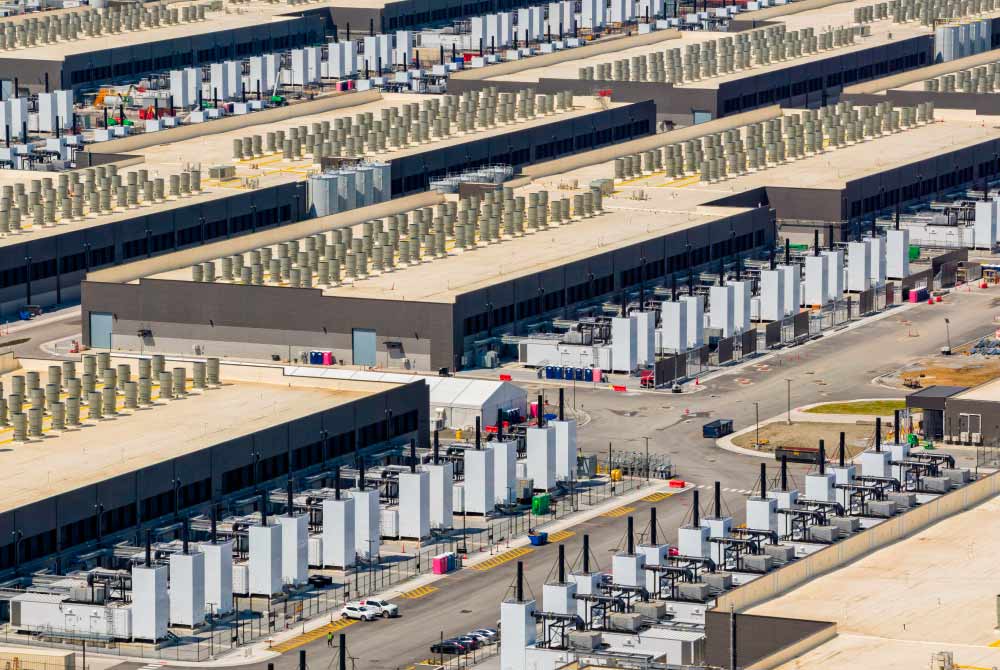 This Amazon AI Data Center in New Carlisle, Indiana, sits on 1,200 acres of land and is one of thousands of data centers in the U.S. Read more about data centers in Story 2 below.